1 / 18

Investigating Isocomene: Enol Ethers and 2,3-Dicarbonyl Compounds Using LDA

This study explores the reactivity and formation mechanisms of enol ethers and 2,3-dicarbonyl compounds in the presence of lithium diisopropylamide (LDA). We delve into the kinetic versus thermodynamic control of enolate formation, highlighting the properties of cross-conjugated enolates. The paper also discusses various alkylation methods, the role of Grignard reagents, and the stability of enol ethers under acidic conditions. Additionally, we present a survey of Frontier Molecular Orbital (FMO) theory in the context of [2+2] cycloadditions, providing insights into mechanistic pathways.

duscha
Télécharger la présentation

Investigating Isocomene: Enol Ethers and 2,3-Dicarbonyl Compounds Using LDA

An Image/Link below is provided (as is) to download presentation Download Policy: Content on the Website is provided to you AS IS for your information and personal use and may not be sold / licensed / shared on other websites without getting consent from its author. Content is provided to you AS IS for your information and personal use only. Download presentation by click this link. While downloading, if for some reason you are not able to download a presentation, the publisher may have deleted the file from their server. During download, if you can't get a presentation, the file might be deleted by the publisher.

E N D

Presentation Transcript


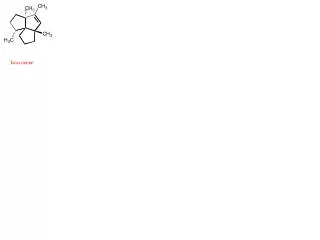
  1. Isocomene

  2. 2. !,3-dicarbonyl compounds and enol ethers

  3. 1. LDA - lithium diisopropylamide 2. !,3-dicarbonyl compounds and enol ethers

  4. 1. LDA - lithium diisopropylamide 2. !,3-dicarbonyl compounds and enol ethers 3. Kinetic vs, thermodynamic control of enolate formation Cross-conjugated enolates 4. Alkylations

  5. Grignard reagents

  6. Stability of enol ethers in acid

  7. Mechanism of reaction

  8. Survey of FMO theory of [2+2]cycloadditions

More Related