DNA Replication
DNA replication is a crucial process when cells divide, ensuring the genetic code is accurately copied for new cell formation. The replication involves unzipping the DNA molecule, bonding free nucleotides to bases, enzyme actions like helicase and DNA polymerase, and proofreading for accuracy. Learn how this essential process works and its central ideas for replication success.

DNA Replication
E N D
Presentation Transcript
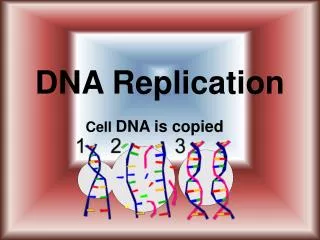
DNA Replication When cells divide the DNA copies itself to provide genetic code for new cell.
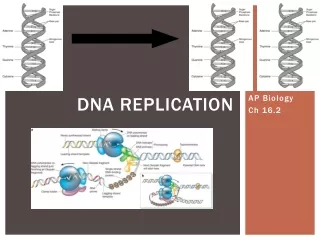
DNA Replication • DNA molecule unzips exposing bases • Free nucleotides bond to these bases • A with T • G with C
Enzymes used in process • Helicase – opens & unzips • DNA polymerase • Builds new strand • Matches complimentary bases • 2 sets of enzymes
Ideas Central to Replication • Each strand is a mirror image • Each strand serves as a Template • To copy DNA = Replication
Proofreading by enzymes • Corrects new strand from old • Mistakes can happen • Especially if dividing rapidly