Age of Imperialism
130 likes | 310 Vues
Age of Imperialism. Ch. 27 pp. 685-709. Concept Questions. How did the Industrial Revolution lead to Imperialism? What are the causes and characteristics of imperialism? How does location impact the characteristics? What are the effects of imperialism?


Age of Imperialism
E N D
Presentation Transcript
Age of Imperialism Ch. 27 pp. 685-709
Concept Questions • How did the Industrial Revolution lead to Imperialism? • What are the causes and characteristics of imperialism? • How does location impact the characteristics? • What are the effects of imperialism? • How does imperialism lead to nationalism, alliances and World War I?
Motivations • Political • Nationalism and the desire to increase territory • Adding port cities and trade routes • Berlin Conference – division of Africa • Economic • Need for raw materials – cotton, rubber, oils • New markets for manufactured goods – industrialization • Mining to create wealth – diamonds, gold, copper, tin • Social • Social Darwinism – survival of the fittest • White Man’s Burden – civilize other races by spreading their culture • Spread of Christianity through missionaries
Management of Colonies Direct Indirect Foreign officials brought in to rule No self-rule Goal: assimilation Government institutions are based only on European styles Examples: French: Somaliland, Vietnam German: Tanganyika Portuguese: Angola Local government officials were used Limited self-rule Goal: to develop future leaders Government institutions are based on European styles but may have local rules Examples: British: Nigeria, India, Burma U.S.: Pacific Islands
Middle East • Modernization of Egypt under Muhammad Ali • Big debt owed to Britain • Built the Suez Canal - connected Red Sea to Mediterranean • British take control of the Canal to pay for debts • Ottoman Turks • Weak sultans cause a decline in power • European countries rush to grab territory • Geopolitics - interest in land for strategic location or products • Example: Britain and Russia – Persian Gulf for oil
India – “Jewel of the Crown” • Queen Victoria – 1837-1901 • British East India Company • Control over India • No competition allowed between British and Indian companies • Sepoy Rebellion/Mutiny – Indian Revolt of 1857 • Pushed by Christian conversions and racism • Indian soldiers rebelled but unable to coordinate between Hindu and Muslim Indians • Failure causes the Raj – increased control by Britain (1757 – 1947) • Indians are second class citizens in their own country
China • Series of concessions • Not impressed by technology of the west • Pride in ancient culture and self-sufficient • Opium Wars • British sales of Opium to purchase tea • Chinese executed opium dealers, Britain responded with war • Superior technology allows Britain to win and establish spheres of influence • Taiping Rebellion • Rebellion caused by the Opium War loss • Manchu rulers challenged • European help needed to put down the rebellion • Boxer Rebellion • Interior rebellion protesting foreign influence • Hundreds of foreigners killed • U.S. plays large role in putting down the rebellion establishing their own influence in China – Open Door Policy
Japan • Commodore Mathew Perry • Black Fleet • Treaty of Kanagawa - agreed to trade with western powers to avoid colonization • Modernization • Becomes imperialistic to compete with the west • Sino-Japanese War – vs. China over Korea • Russo-Japanese War – vs. Russia over Manchuria • Korea annexed and ruled harshly
Southeast Asia • French and British lay claims in Indochina • Efforts to drive out foreign influence • Siam (Thailand) – King Mongkut • Argued that his country was a natural buffer between British and French colonies • Was able to modernize and maintain independence • U.S. - acquires Pacific Islands (Spanish-American War) • Philippines, Guam, Puerto Rico • Panama Canal • Hawaii • Queen Liliuokalani – overthrown to allow annexation • Sanford B. Dole becomes president of republic, immediately requests statehood
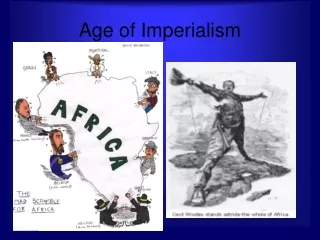
Imperialists Divide Africa • Africa Before Imperialism • Independent - traders, military, nations • Nations Compete for Overseas Empires • Abuse by the Belgian King Leopold • Berlin Conference – division of Africa - unnatural divisions based on what the European nations wanted ( no African invited) • Cash crops replace food crops – impact? • Military Technology: modern weapons, naval vessels • Made conquest easier • Transportation Technology: steamboats, railroads • Made settlement in the interior possible • Transported goods as well as people • Communication: telegraphs, cables, wireless radio • Medical: quinine
Africa • Three Groups Clash over South Africa • Africans (Zulu), Dutch (Boers), British • Zulu chief, Shaka created a state in Southern Africa through military actions • Great Trek – movement of Boers north (Guns,Germs,Steel) • Boer War – Dutch vs. British in attempt to keep foreigners out of S. Africa • Few African Nations able to remain independent
Impact of Colonial Rule • Positive • Reduced local warfare • Improved sanitation, hospitals, schools • Infrastructure - railroads (Cecil Rhodes), telephone/telegraph, dams • African products valued • Negative • Lost control of their land & independence • Abuses of human rights • Resistance in some regions • Cash crops over food crops – caused famine • Disease • Loss of culture and identity • Depletion of natural resources • Boundaries which caused rivalries between groups • Increased competition between European nations