Download
1 / 11
120 likes | 259 Vues
Hinduism, the predominant religion in India, is characterized by polytheism, reverence for nature, and principles of nonviolence. Hindus believe in reincarnation and karma, where actions in this life influence the next. Major deities include Brahma the creator, Vishnu the preserver, and Shiva the destroyer. The caste system stratifies society into four main categories: Brahmans (priests), Kshatriyas (warriors), Vaisyas (merchants), and Sudras (laborers), with untouchables at the bottom. In 1949, untouchables gained equal rights, marking a significant societal change.

E N D
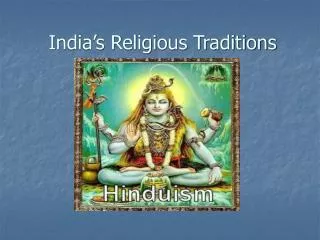
India’s Religious Traditions Hinduism
Hinduism • Major religion in India (83%) • Polytheistic = worship many gods • Believe in nonviolence & respect nature • Believe in reincarnation = rebirth of the soul in various forms • Believe in Karma = every deed in this life affects a person’s fate in a future life. (What goes around comes around.)
3 Main Hindu Gods • Brahma = creator • Vishnu = preserver • Siva (Shiva) = destroyer
The Caste System • a strict system of social classes. • established at birth • each has a traditional job • friendship & marriage rarely exist between different castes
Four Main Categories • Brahmans = priests or scholars • Kshatriyas = rulers or warriors • Vaisyas = merchants or professionals • Sudras = laborers & servants
Dharma • Duties & obligations. (Guide of conduct - how you should act.) • Each caste has its own dharma
Untouchables • lowest caste, held jobs that were thought of as “impure,” dealing with hair, leather or blood. • 1949 - untouchables were given equal rights