Postwar Japan and the Rise of Communism in East Asia: Economic, Social, and Political Dynamics
This chapter explores the characteristics of postwar Japan, emphasizing its economic recovery and political growth while navigating Western influence. It examines the struggle for Korea amid U.S. and Soviet tensions, the emergence of Communist power in China, and the socio-political repercussions in Vietnam and Korea. The text delves into Japan's shrinking military forces post-WWII, South Korea's booming economy, and Communist movements across China and Vietnam. The clash between traditional values and modern Western ideals is also discussed within the broader context of East Asian development.

Postwar Japan and the Rise of Communism in East Asia: Economic, Social, and Political Dynamics
E N D
Presentation Transcript
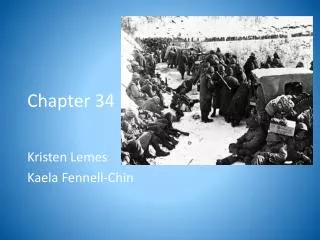
Chapter 34 Kristen Lemes Kaela Fennell-Chin
Objectives • What are the characteristics of postwar Japan in terms of economic and political growth? • Struggle between north and south (U.S. versus the Soviet) over Korea leading to the Korean War • China’s emerging Communist power and its social, political, and economic effects • South Korea’s economic growth
Vietnam struggle between North and South • French dominance in Vietnam: puppet emperors • Communism prevalence in China, Vietnam, and North Korea • Tension between Japanese identity and Western influence • Mao’s Communist movements in China • Japan’s military forces shrinking after WWII because of U.S. protection
Vocabulary • Liberal Democratic Party • Pacific Rim • Taiwan • Cultural Revolution • Republic of South Korea • Great Leap Forward
More Vocabulary • People’s Democratic Republic of Korea • Korean War • People’s Republic of China • Party cadres • People’s Liberation Army
More Vocabulary • Pragmatists • Gang of Four • Tayson Rebellion • Vietnamese Nationalist party • Communist party of Vietnam
China • Social • Social classes and class structures • Traditional China vs. Communist China • Women gained some freedom • Students/Intellectuals change allegiance to Communism • No civil war • Population increase
China • Political • Chinese communists expelled Chiang regime • Party Cadres/ People’s Liberation Army • Mao • Pragmatic social/ political reform • Collectivization • Great Leap Forward/ Cultural Revolution
China • Political(Continued) • Introduction of birth control programs • War with Japan • Mao committed to liberation of women • Mao’s death • Pragmatists opened China to Western influences • Stressed secular/social harmony rather than religious
China • Political • Wars strengthened Communists • Extended control over North China • Interaction • Invaded Hong Kong • Invaded by Japan • Intervened in Korean War
China • Cultural • Traditional order in ruins • Less concentrated on religion : Confucianism • Secular and social harmony • Economics • Worst famine from growing population
Vietnam • Social • Communism • Social classes • Women gained new legal right • Like in China • Western educated middle class • Worked in government and private careers
Vietnam • Political • Confucian emperor • Conservatives committed to Confucianism • French missionaries = Catholicism • Vietnam War • Superpowers intervene in many civil war • Want independence • US tries to help • Then Vietnam becomes Communist
Vietnam • Political • Vietnamese National Party (VNQDD) • Educated middle class • Communists in control • Viet Minh (based in Southern China) • Communist dominated resistance • Fought Japanese • Proclaimed independence
Vietnam • Political • Viet Cong (South) • Communists resistance in the South • Supported by US • Colonial war ended with French defeat • Economics • Major rice producer
Taiwan • Social • Part of the Pacific Rim • Political • Chinese government • Conservative and stable nation • Supported by US • The Republic of China • Government remained stable
Taiwan • Interaction • Built important regional contacts • Joined global textile trade • Cultural • Education increased/ more traditional societies • Traditional medical + Western influences
Taiwan • Economics • Economic modernization • Achieved economic prosperity • Agricultural/Industrial production increased • Money into education
Singapore • Social • Traditional societies • Political • Formerly owned by British • Developed into a vigorous free port and gained independence • Stable nation • Developed similar to Taiwan • Authoritarian rule suppressed opposition movements
Singapore • Cultural • Blended Western and traditional ideas • Economics • Fourth largest port • Successful economic development • Manufacturing and banking