Understanding Hypertension: The Silent Killer and Its Impact on Heart Health
Hypertension, known as the "silent killer," can cause serious harm without noticeable symptoms. It is defined as elevated blood pressure in the arteries, increasing the risk of severe cardiovascular events like heart attacks and strokes. Blood pressure readings consist of two numbers: systolic (pressure during heartbeats) and diastolic (pressure during heart rest). Various factors, including lifestyle choices and genetics, contribute to high blood pressure. Making healthy lifestyle changes, such as maintaining a balanced diet and regular exercise, can significantly lower blood pressure and reduce health risks.

Understanding Hypertension: The Silent Killer and Its Impact on Heart Health
E N D
Presentation Transcript
HYPERTENSION The Silent Killer…
The Cardiovascular System • Heart (cardiac) • Circulation (vascular)
The Heart: • Muscle with 2 part pump action. • Closely related to the brain. • Stays healthy by reducing risks.
What Is Blood Pressure (BP)? • Blood moves through the arteries at a higher pressure than normal.
What Do The Numbers Mean? • Systolic is the 1st number. • Highest pressure when heart squeezes blood out.
What Do The Numbers Mean? (Cont) • Diastolic is the 2nd number. • Highest pressure when the heart is filling with blood (relaxing between beats).
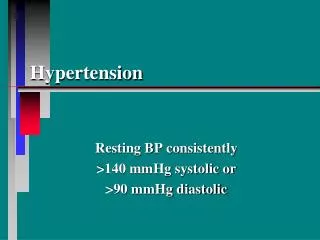
What is Hypertension? • Also called hypertension • When the blood moves at a higher pressure than normal through the arteries.
Facts About BP • 120/80 “normal”. • Can vary in same person. • Lower in children, increases with age.
Facts About BP (Cont) • Increases in overweight individuals. • Increases in exercise and emotional excitement. • Decreases slightly during sleep.
What Causes High BP? • Often unknown cause. • Linked to a disease or drug. Controllable risk factors Uncontrollable risk factors
Do I Have High Blood Pressure? • Based on a series of readings. • Speak with your doctor.
Why Is It Called “The Silent Killer”? • It often goes undiagnosed. • Often people have no symptoms.
So What If My BP Is High? • Higher risk of heart attack, stroke, heart disease, kidney failure. • Damages blood vessels.
What Can You Do About It? • Lower your risk by making lifestyle changes.
Lifestyle Changes • Stop smoking
Lifestyle Changes (Cont) • Maintain a healthy weight
Lifestyle Changes (Cont) • Sodium and calcium • Lower salt intake • Make sure you have enough calcium in your diet
Lifestyle Changes (Cont) • Fat and cholesterol
Lifestyle Changes (Cont) • Exercise regularly
Lifestyle Changes (Cont) • Alcohol
Lifestyle Changes (Cont) • Manage stress Be Happy! Or else!
Medications (Antihypertensives) • Goal is to lower BP to normal level
Healthy Living • Is this all really important? • By modifying your lifestyle you can lower your risk of high blood pressure • Take the first steps to better health