Download
1 / 6
60 likes | 167 Vues
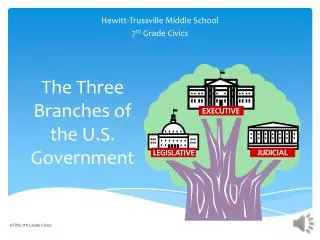
This overview explores the three branches of the United States Government: Legislative, Executive, and Judicial. The Legislative Branch creates laws and establishes taxes. The Executive Branch ensures laws are implemented and oversees the armed forces. The Judicial Branch interprets laws and evaluates their constitutionality. Each branch has specific powers and checks on the others, such as the Judicial's ability to overturn laws, the Executive's appointment of judges, and the Legislative's capacity to override vetoes. This system of checks and balances maintains a democratic governance.

E N D
BY TAHA & LEE U.S BRANCHES OF GOVERNMENT
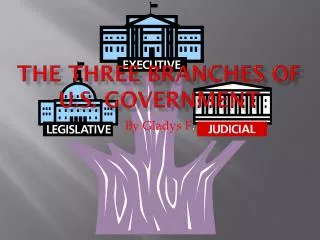
LEGISLATIVE BRANCH Makes laws and establishes taxes.
EXECUTIVE BRANCH Makes sure laws are carried out and commands armed forces
JUDICIAL BRANCH Decides what laws mean and if the laws follow the constitution
BRANCHES TO OTHER BRANCHES • Judicial legislative : can over turn laws if against constitution • Judicial Executive : can overturn actions from the president if its against the constitution • Executive Judicial :appoints supreme court justices and other courts • Executive Legislative : can reject laws the congress has passed ON OTHER SLIDE
BRANCHES TO BRANCHES • Legislative Judicial : can refuse presidents judgeships • Legislative Executive can override presidents veto