Enhancing User Engagement through SOA: Integrating Clients and Servers in Web 2.0
This document explores the conceptual architecture and patterns of interaction within Client-Server models tailored for Web 2.0. Emphasizing the importance of treating software not merely as an artifact, but as a dynamic engagement process with users, this guide outlines critical components such as SOA capabilities, data management, and service invocation layers. It details the integration of various services, databases, and communication protocols to create a seamless experience, ensuring that applications are responsive to changing user needs and behaviors.

Enhancing User Engagement through SOA: Integrating Clients and Servers in Web 2.0
E N D
Presentation Transcript
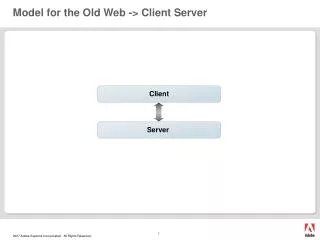
Client Server Model for the Old Web -> Client Server
Abstract Model for Web 2.0 Abstract Model for connecting and integrating capabilities and users Patterns of interaction Users Client Applications/Runtimes Connectivity/Reachability Services SOA Capabilities “Don't treat software as an artifact, but as a process of engagement with your users. “ - Tim O’Reilly
Standard Technologies& Protocols Core Services Web 2.0 Application Development Conceptual Architecture Controller ClientApplicationTier Data/StateManagement SecurityContainer/Model VirtualMachine Rendering& Media Communication Services SOA Design,Development& GovernanceTools • Consistent object & event models • Consistent architectural models Service Invocation Layer Business Rules/ Workflow Registry-Repository Service Container ServiceTier Service Provider Interface EIS Databases Directories ECM Repository MessageQueues LegacySystems Resource Tier
Core Model for SOA (defined in OASIS SOA RM TC) Visibility Execution context Service description Service Real world effect Interaction Contract & Policy
SOFI - based on the Reference Model for SOA Browsers Other? Flex AJAX ClientApplicationTier AIR Acrobat REST Flash Aj WS* Rt HTTP/S, Sockets, AMF, RTMP, SOAP, WS*, REST, … ServicePolicy Servicedescription SOFI Service Tier: Built on the core tenets and axioms of SOA as defined by the OASIS RM for SOA. Data is pulled from multiple sources, manipulated and made available via the service invocation layer for a multitude of clients. Service Invocation Layer Ontology, Semantics, algorithm rules Service Container Registry SOFI Core Engine SOFI Data Service Provider Interface Databases Directories ECM Repository MessageQueues LegacySystems SOFI Data Sources