Download
1 / 10
100 likes | 227 Vues
This article delves into various literary techniques, including allegory, symbolism, diction, and parody. We examine how these elements shape narratives and engage readers, exploring genres from nonfiction to novels. The role of irony highlights outcomes that defy expectations, while similes serve to deepen comparisons. An analysis of satire reveals how writers criticize human shortcomings through humor. By understanding these devices, readers can gain a deeper appreciation of literature's complexities and the myriad ways authors express themes and ideas.

E N D
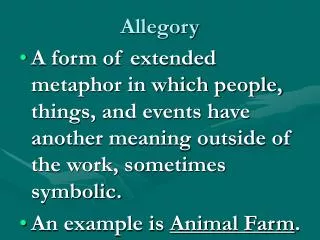
Allegory Symbolical narrative
Diction Choice of words
Genre Class or Category
Irony Outcome that is opposite of what is expected
Nonfiction Literature based upon facts; biographies, histories, and essays
Novel Long complex story
Paradox Contradictory or impossible situation
Parody Humorous imitation of a serious piece
Satire type of literature that holds up human short comings and vices by ridicule
Simile Comparing two things using like or as