Download

1 / 9
0 likes | 1 Vues
In industrial workplaces, safety is built on systems that prevent accidents before they occur. Among these systems, Lockout Tagout protocols stand out as one of the most effective ways to protect workers during equipment servicing and maintenance. At the heart of these protocols lies a simple but powerful device: the lockout safety hasp. By enabling multiple workers to secure a single energy source, safety hasps reinforce accountability, compliance, and teamwork in environments where lives depend on proper isolation.

E N D
Lockout Safety Hasps in Action: Reinforcing LOTO Protocols In industrial workplaces, safety is built on systems that prevent accidents before they occur. Among these systems, Lockout Tagoutprotocols stand out as one of the most effective ways to protect workers during equipment servicing and maintenance. At the heart of these protocols lies a simple but powerful device: the lockout safety hasp. By enabling multiple workers to secure a single energy source, safety hasps reinforce accountability, compliance, and teamwork in environments where lives depend on proper isolation.
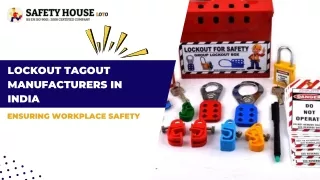
What are Lockout Safety Hasps? Lockout safety hasps are devices designed to allow more than one padlock to be applied to an energy-isolating point. When a hasp is placed on a switch, valve, or breaker, each worker involved in the maintenance attaches their personal lock. The equipment cannot be re-energized until all locks are removed, ensuring that every team member is safe before operations resume. This simple mechanism transforms LOTO from an individual safeguard into a collective responsibility, making hasps indispensable in group lockout situations. Types of Lockout Safety Hasps: Different work environments demand different types of hasps. Common variations include: ● Standard Steel Hasps: Durable and corrosion-resistant, ideal for mechanical and heavy-duty applications. ● Non-Conductive Nylon Hasps: Lightweight and insulated, designed for electrical work to reduce shock risks. ● Scissor-Style Hasps: Compact and versatile, suited for tight spaces or portable use. ● Dual-End Hasps: Adaptable designs that accommodate varying padlock sizes and lock points. ● Color-Coded Hasps: Useful for quick identification, departmental organization, or role-based access.
By offering flexibility, these types ensure that safety managers can match the right hasp to the specific hazards of their workplace. Safety Hasps in Action: Real-World Applications The true value of safety hasps is seen in their practical application across industries: Manufacturing: In automotive plants, conveyor systems and robotic arms are routinely serviced. Safety hasps allow multiple technicians to lock out the same machine, ensuring no one is exposed to unexpected startups. Energy and Utilities: Electrical substations often require group lockouts during maintenance. Non-conductive nylon hasps prevent accidental energization while protecting workers from electrical hazards. Chemical and Pharmaceutical: Valve lockouts in pressurized systems are critical. Safety hasps ensure that multiple engineers can secure valves during cleaning or replacement, reducing risks of leaks or chemical exposure. Construction: Portable hasps are used to secure generators, cranes, and mobile equipment. On dynamic job sites, they provide flexibility and collective control. Food and Beverage: Fast-paced production lines demand quick servicing. Safety hasps ensure that multiple operators can lock out packaging machines during maintenance, preventing mechanical injuries.
These examples highlight how safety hasps reinforce LOTO protocols by making group isolation practical and reliable. Case Studies: Safety Hasps Preventing Accidents Case Study 1: Automotive Manufacturing Plant In a large automotive facility, a team of five technicians was tasked with servicing a robotic welding arm. Without group lockout, one technician could have removed their lock prematurely, risking energization while others were still inside the work zone. By using a steel safety hasp with six padlock holes, each technician secured the arm. The hasp ensured that the machine remained isolated until the last lock was removed, preventing a potential accident and reinforcing collective accountability. Case Study 2: Chemical Processing Facility During a turnaround at a chemical plant, engineers needed to replace a valve in a pressurized pipeline. The risk of accidental re-pressurization was high, and ensuring leak-free startup was critical. A vinyl-coated lockout hasp was applied to the valve lockout device, allowing multiple engineers to secure the valve with their personal padlocks. The vinyl coating provided durability and corrosion resistance in the harsh chemical environment, while the multi-lock design ensured that the valve could not be re-energized until every worker had removed their lock. The procedure was completed without incident, demonstrating how lockout safety hasps enhance both protection and compliance in chemical operations.
Benefits of Using Safety Hasps in LOTO Protocols The advantages of incorporating safety hasps into LOTO systems are significant: ● Compliance: Aligns with OSHA and international safety standards. ● Visibility: Multiple locks on a hasp provide a clear signal that equipment is under maintenance. ● Accountability: Each worker’s lock represents personal responsibility for their safety. ● Prevention: Eliminates the risk of unauthorized re-energization. ● Teamwork: Encourages collective ownership of safety during complex operations. By combining simplicity with effectiveness, safety hasps strengthen the foundation of workplace safety culture.
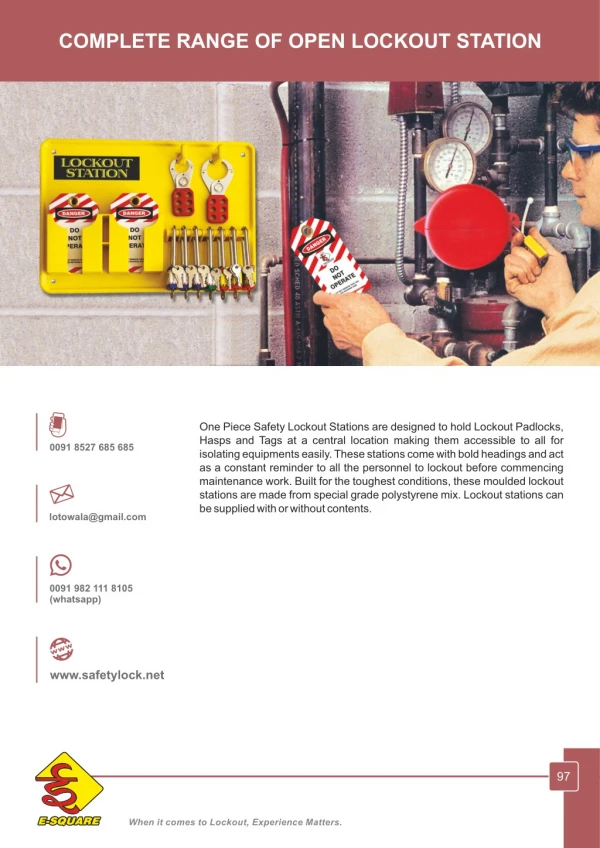
Best Practices for Implementing Safety Hasps: To maximize their effectiveness, organizations should adopt best practices such as: ● Standardization: Ensure consistent use of hasps across departments and sites. ● Training: Educate workers on proper application, removal, and inspection. ● Integration: Store hasps in LOTO stations and kits for quick access. ● Auditing: Conduct regular checks to verify condition and compliance. ● Identification: Use engravings, labels, or color coding to improve traceability. These practices ensure that safety hasps are not only available but also used correctly and consistently. Choosing the Right Safety Hasps: Selecting the right hasp requires consideration of material strength, environmental conditions, number of padlock holes, and visibility. For example, steel hasps may be best for rugged mechanical environments, while nylon hasps are safer for electrical work. Safety managers should evaluate suppliers based on quality, customization options, and industry experience. Manufacturers such as E-Square are recognized for offering a wide range of compliant, customizable hasps
trusted by global industries, making them a reliable choice for organizations seeking durable solutions. Building a Safety Culture Through Hasps: Safety hasps are more than mechanical devices—they symbolize shared responsibility. When workers see their locks alongside those of their colleagues, it reinforces the idea that safety is collective. Leadership can strengthen this culture by recognizing teams that consistently follow LOTO protocols, encouraging feedback, and investing in ongoing training. Visible lockout devices like hasps serve as daily reminders that safety is not just a rule but a value embedded in the workplace.
Conclusion: Lockout safety hasps are essential tools for reinforcing LOTO protocols. By enabling group lockout, they ensure compliance, accountability, and accident prevention across industries. Their simplicity belies their importance: a small device that carries the weight of collective safety. For organizations committed to protecting their workforce, integrating safety hasps into LOTO systems is not just a best practice—it is a cornerstone of effective safety management. Case studies from manufacturing, chemical processing, and utilities demonstrate that hasps are more than accessories; they are life-saving tools that embody the principle of shared responsibility in industrial safety.