Download
1 / 13
130 likes | 258 Vues
The Scottish Ambulance Service's National Risk and Resilience Department, led by Lynsey McCann, reflects on extensive winter planning amid the coldest December on record in the UK. With a spike of 3,141 calls on Hogmanay, assistance was sought from the MoD, Coastguard, and volunteers. Improvements include modifying the Resource Escalatory Action Plan (REAP), enhancing 4x4 vehicle capabilities, and ensuring effective communication across agencies. Regular performance reviews and a rigorous action tracker aim to bolster response efforts for future winter challenges.

E N D
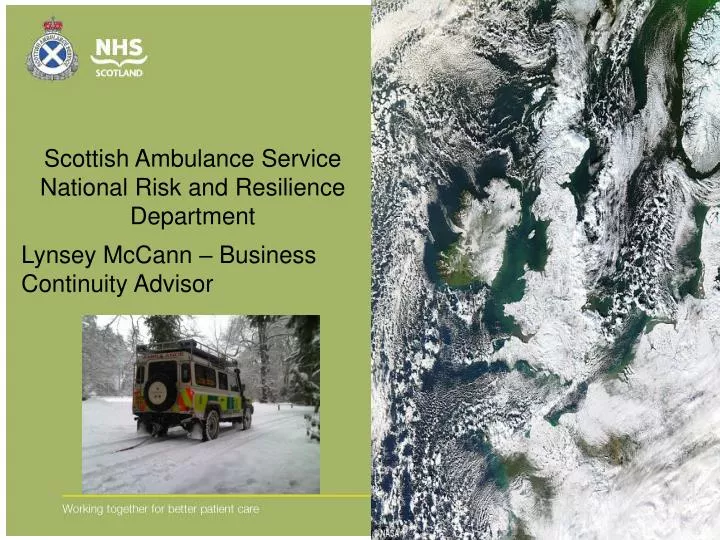
Scottish Ambulance ServiceNational Risk and Resilience Department Lynsey McCann – Business Continuity Advisor
Background • Coldest December on record in the UK • Busiest Hogmanay on record • Dealt with 3141 calls between midnight and 7am on 1st Jan – 47% increase on previous year • Requested aid from MoD, Coastguard and Volunteers • Took delivery of 22 new 4x4 vehicles • Plan to introduce winter tyres across the fleet before winter 2011/12 • NHS Scotland has in place a well established and system wide winter planning process, which is subject to rigorous performance review and continuous improvement
Planning Process Processes in place before Winter 2010/11 • Action tracker from 2009/10 • Modification to Resource Escalatory Action Plan (REAP) • Regular Conference Calls to monitor progress • Set up of National Command & Coordinating Centre (NCCC)
Hot Debrief • Hot Debrief took place in Dec 2010 • Staff from all Departments completed debrief form • Conference call took place to discuss the main points • What was captured • Areas that did not work well • Areas that did work well • Areas for improvement
Areas that did not work well • Access to 4x4s – Divisional & Workshops • Ability for staff to get to work • Poor communication between NCCC/EMDC/OPS • Confusion of roles and responsibilities of the NCCC • Staffing levels within EMDC • Access to fuel • Lack of snow chains / winter tyres • No budget reserve for Major Incidents • Supplies of equipment – blankets, drugs, grit, shovels etc.
Areas that worked well • Staff professionalism • Support of external agencies e.g. Red Cross, Mountain Rescue, Military, First Responders • Use of Special Operations Response Teams (SORT) • EMDC Staff prioritising workload • Workforce planning • REAP levels and plan • Conference Calls to gauge national picture • Major incident EMDC Desk
Areas for improvement • Increase 4x4 capability & distribution • Feasibility of Winter Tyres • Procedures for staff to get to work – Common pick up points • NCCC scope & procedure review • Use of alternative communication e.g. Social Media • Stockpile additional welfare equipment i.e. Blankets, hot pack meals, etc. • Ensure actions are followed up - executive lead
What’s in place now • Review of 4x4 vehicles • Review of HR Policies • Daily recording of REAP levels – Local & National • Review of REAP levels and management actions that go with them • Exercise Polar Storm planning team - Completed • Review of NCCC • SG Winter Review Group
What we are doing now? • Production and completion of action tracker (before winter) • Ensure communication with partner agencies • Seasonal Flu Programme • Review of Capacity Management/REAP plan