Japanese internment
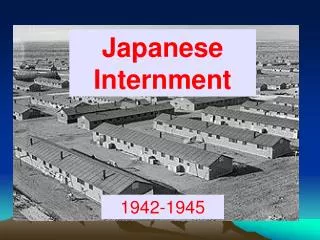
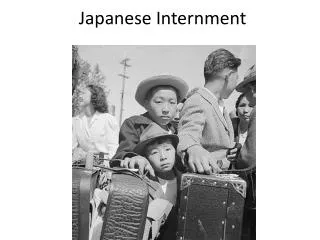
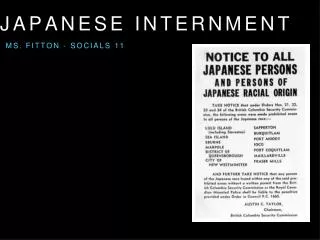
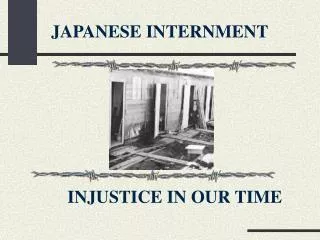
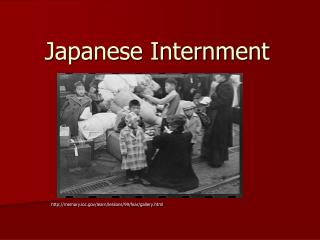
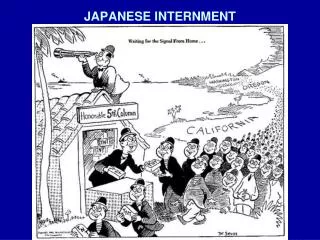
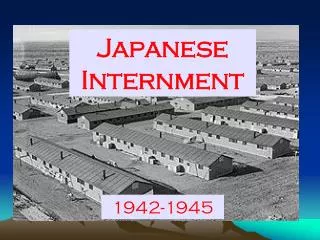
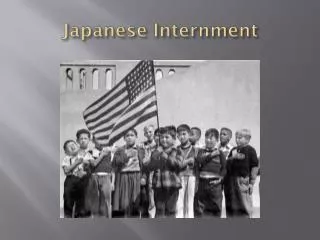
During World War II, the U.S. government interned 120,000 Japanese Americans, two-thirds of whom were citizens, despite their loyalty. In contrast, only ten individuals, all Caucasian, were convicted of spying for Japan throughout the war. This disparity highlights the unjust treatment of Japanese Americans and the racial prejudices that influenced wartime policies. The internment remains a significant chapter in American history, raising questions about civil liberties, discrimination, and the impact of fear on government actions during national crises.

Japanese internment
E N D
Presentation Transcript
Japanese internment In the entire course of the war, 10 people were convicted of spying for Japan, all of whom were Caucasian. In the entire course of the war, 10 people were convicted of spying for Japan, all of whom were Caucasian. Roosevelt interned 120,000 Japanese 2/3 were American citizens and had never shown disloyalty