Exploring Northern Renaissance Printmaking Techniques in 15th Century Art
80 likes | 212 Vues
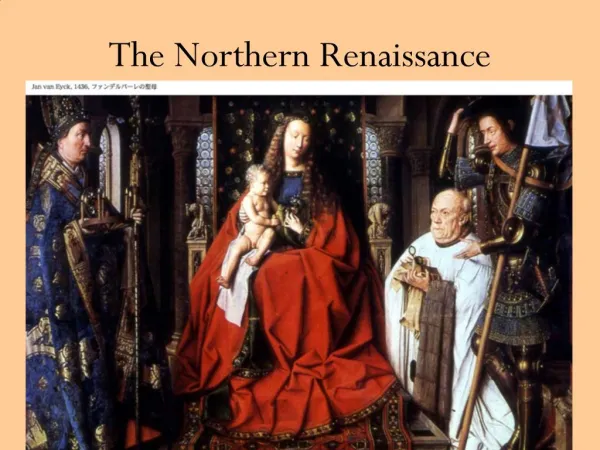
The Northern Renaissance of the 15th century saw a revolution in art through innovative printmaking techniques. Woodcuts were produced by carving images into wood blocks to create prints, allowing for mass production of illustrations. Engraving provided fine detail by carving metal surfaces, while etching used acid to create impressions by scratching through a wax coating. Notable works from this era include the "Merode Altarpiece" by Robert Campin and the "Ghent Altarpiece" by Jan van Eyck, showcasing the blending of tempera, oil, and wood in their craftsmanship.


Exploring Northern Renaissance Printmaking Techniques in 15th Century Art
E N D
Presentation Transcript
The Northern Renaissance 15th Century Style
Wood Cuts • During the 1460s books were being produced using printmaking using wood blocks. • To do this, piece are carved away from a wood block to leave the paper exposed when printed.
Engraving • Engraving involves carving into the surface of metal with a BURIN. Ink is then rubbed into the carved areas and run through a printing press. This allows for finer details than wood block.
Etching • Similar to Engraving, but involves covering the surface of a metal with wax, scratching away the wax in areas and dipping the metal into acid, this eats away the metal creating an impression. The printing is done in the same way as engraving.
Merode Altarpiece Artist: Robert Campin Date: 1425-1430 Medium: Tempera and Oil on Wood
The Ghent Altarpiece Artist: Jan van Eyck Date: completed 1432 Medium: Oil on Panel Location: Cathedral of St. Bavon, Ghent, Belgium
The Ghent AltarpieceClosed Artist: Jan van Eyck Date: completed 1432 Medium: Oil on Panel Location: Cathedral of St. Bavon, Ghent, Belgium