Jellyfish: Enigmatic Ocean Dwellers
290 likes | 333 Vues
Delve into the captivating world of jellyfish - from their ancient history to unique characteristics, movement, feeding habits, predators, and impacts. Explore jellyfish blooms, stings, treatment, sizes, and human uses. Discover the mesmerizing sea anemone and its lifecycle.


Jellyfish: Enigmatic Ocean Dwellers
E N D
Presentation Transcript
What makes something a Jellyfish? Take a second: • On a blank sheet of paper write down all of the characteristics that identify a jellyfish. • When you think of a jellyfish—what do you think of? Describe the picture in your mind • Now: Draw the jellyfish you just described.
Jellyfish History • Jellyfish have been around for over 650 million years • There are more than 2000 known species • Can be found everywhere from the surface of the water to the depths of the ocean
What is a Jellyfish? Where do they fit in? • A jellyfish is not a fish at all, it is an invertebrate in the phylumCnidaria • Cnidarians are a group of invertebrates that have stinging tentacles • This includes corals, anemones, andJELLYFISH
Cnidarian Characteristics All Cnidarians share the following characteristics: • Invertebrates(no backbone) • Radial symmetry(tentacles arranged around a central mouth) • Tentacles • Only 2 cell layers • Saclike digestive tract (in and out the same way) • Simple nervous system (nerve net)
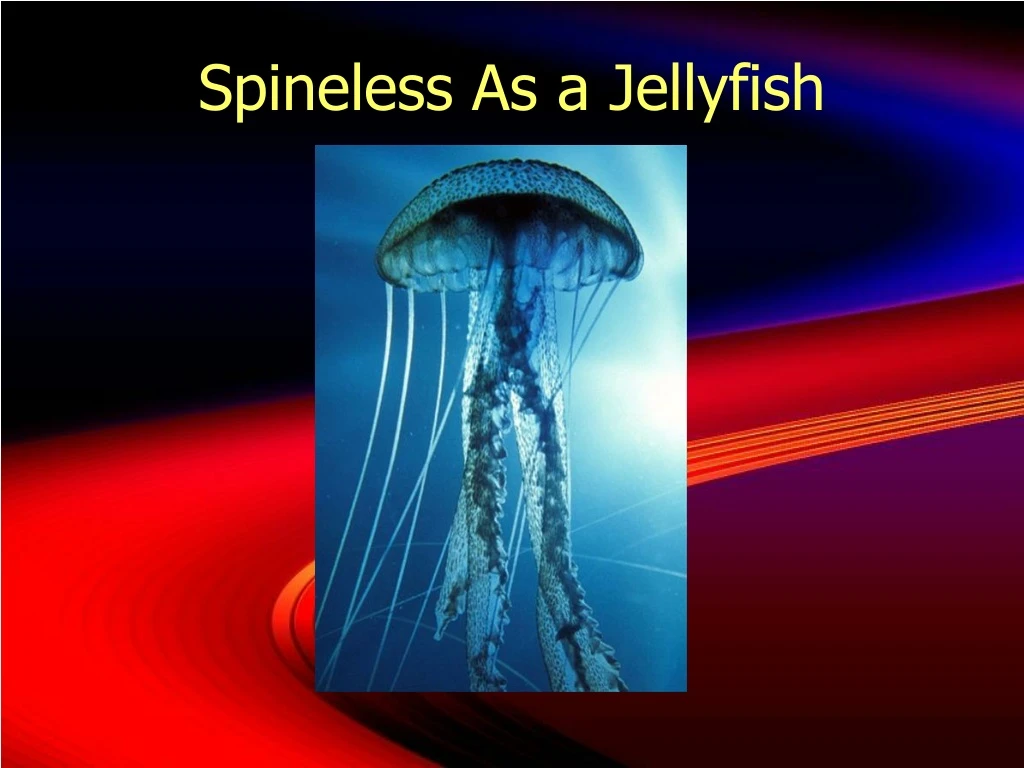
Bounce on the Tops • The top of the jellyfish is called the medusa • It is made of 2 cell layers • Epidermis (outside) andgastrodermis(inside) • In between the layers is a jelly-like material called the mesoglea • A jellyfish is 90% water
Jellyfish Movement • Jellyfish float on the water because the mesoglea is less densethan the ocean • Move by contracting the medusa in a rhythmic motion • Very weak swimmers and will not swim after humans or prey
Living and Breathing • Oxygenwill diffuse directly INTO the cell membrane from the water • Carbon dioxide and wastes will diffuse OUT OF the cell membrane into the water
Feed Me: Tentacles have 2 main functions: • Tentacles: • Gather food and • Bring the food to the mouth and digest it in the cavity • CNIDOBLASTS are the stingingcellsIN the tentacles: • Little barbs in the cellscalled NEMATOCYSTSpoke into prey and disable them • They can only be used once and then need to be replaced
Nematocyst The barbs inside the stinging cells (cnidoblasts) that are inside tentacles and contain toxins >Now watch it in slow motion!
Predators and Prey • Predators (who eats jellyfish?): • Tuna • Sharks • Turtles • Prey (what do jellyfish eat?): • microscopic plankton, fish larvae, other jellyfish
Making More Jellyfish • The four-leaf clover on top of the jellyfish are the sex organs • Sperm cells swim out of the mouth of the male and into the mouth of the female • Egg cells are fertilized in the female ovary
Jellyfish Life Cycle • Larva are called planula • They attach to a substrate and develop into a POLYP • The POLYPwill mature and develop into a MEDUSA which is a free floating organism
Human Uses of Jellyfish • Food: 12 different species of jellyfish are used in food in southeast Asia • Bioluminescence: Scientists found a protein for bioluminescence in jellyfish and recreated it to help detect specific genes in cells
Jellyfish Blooms • A jellyfish happens when ocean currents and other environmental events cause there to be groupings of thousands of jellyfish! • Blooms can have a bad effect on people as they result in: • More jellyfish stings • Decline in tourism on coasts • Decline in commercial fish supplies due to jellyfish feeding • Clogging engines of boats, power plants and desalination plants
Jellyfish Stings • Many jellyfish stings are not deadly and only cause irritation • Some jellyfish venom can cause anaphylaxis (allergic reaction where you can’t breath)—which may result in death • Box jellyfish stings can be deadly
Treatment of Jellyfish Stings • Primary Goal of treating jellyfish stings: • Prevent injury to rescuers • How to treat Jellyfish stings: • Inactivate nematocysts—using vinegar or salt water(do not use alcohol, ammonia, or urine) • Remove tentacles attached to the patient - shaving the area with a safety razor or credit card also removes nematocysts
Largest Jellyfish • Lion’s Mane Jellyfish • Medusa can be up to 7 feet in diameter • Tentacles can reach 120 feet
Smallest Jellyfish • Irukandji • Only 1.5 inches across • Almost invisible
Most Toxic Jellyfish • Box Jellyfish • Most deadly venom in the animal kingdom (caused 5568 recorded deaths since 1954) • Found in the warm waters of Australia and Indo-Pacific
Amnemonemomne Sea Anemones
Sea Anemone Characteristics • Classified in the class Anthozoa (which means “flower animal”) • Tentacles • Radial Symmetry • Nerve net • Sessile (stationary) lifestyle
Feeding in the Sea Anemone • Tiny organisms and small fish swim into the tentacles and are paralyzed • Bring food to mouth • Food is digested in the digestive sac • Undigested food and wastes are eliminated through the mouth
Sea Anemone Life Cycle • Sea anemones do not reach a medusa stage • They live as a polyp, attached to a substrate • Reproduction: • Asexually - fission, regeneration • Sexually - male and female sex cells combine
Symbiosis • Symbiosis: a mutually beneficial relationship between different species • Ex: sea anemones and clownfish • Clownfish keep the anemone from being bitten by other fish • Sea anemones protect the clownfish from predators
Predators and Prey • Predators: grey sea slug, tompot blenny • Prey: small fish, shrimp, sea stars
Sea Anemone Habitat • Sea anemones are mostly found in rocky coastal areas • When the tides go out, they can be found in tide pools