Understanding the Structure and Function of DNA in Human Genetics
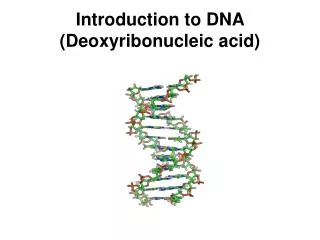
This overview introduces the fundamental structure of DNA, a polymer made of nucleotides, consisting of two types of bases: purines (Adenine and Guanine) and pyrimidines (Thymine and Cytosine). It discusses the organization of chromosomes into homologous pairs within the nucleus. In human cells, there are 23 homologous pairs, including autosomes and sex chromosomes. Each human cell contains the entire genome, with all 30,000 gene pairs, emphasizing the importance of genes in determining biological characteristics.

Understanding the Structure and Function of DNA in Human Genetics
E N D
Presentation Transcript
Question: • From your on-line computer activity, what do you know about the structure of DNA?
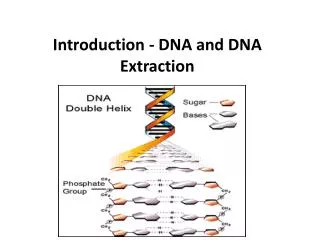
Structure of DNA • DNA is a polymer of what????
There are two types of bases: Adenine & Guanine ( A & G ) = Thymine & Cytosine ( T & C) =
Intro to DNA • Chromosomes exist in “matching pairs” in the nucleus of a cell • Scientists call the matching pairs “homologous pairs”. • In every human body cell, there are 23 homologous pairs of chromosomes.
Example of a human Karyotype IN HUMANS Pair # 1- 22 = “autosomes” Pair #23 = “Sex chromosomes”* XX = * XY =
Karyotype • What does the prefix “homo” mean? • How are homologs similar? #1 #2 #3 #4
Karyotype Q: How are homologs different???? • GENE – A:
IMPORTANT !! • All 46 chromosomes are present in every human body cell!!! Therefore • All 30,000 genes pairs which make up a human are in every human body cell!
IMPORTANT !! • Genome – • *** Every body cell of an organism contains its entire genome !!!! *****