
Understanding Cholesterol and Its Impact on Health: Nutrients, Proteins, and Healthy Eating
Cholesterol is a fatty, waxy substance that can block arteries, leading to serious cardiovascular issues like strokes and heart attacks. Nutrients play a crucial role in our energy levels and overall health. Carbohydrates, proteins, and fats serve as energy sources, while vitamins and minerals help the body function properly. Proteins build tissue, and fats aid in vitamin absorption and healthy skin. Understanding the differences between simple and complex carbohydrates and consuming high-fiber foods can reduce disease risk and promote well-being.

Understanding Cholesterol and Its Impact on Health: Nutrients, Proteins, and Healthy Eating
E N D
Presentation Transcript
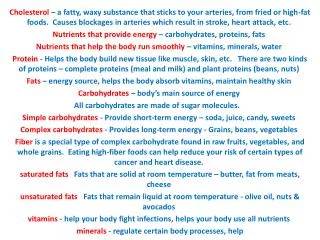
Cholesterol – a fatty, waxy substance that sticks to your arteries, from fried or high-fat foods. Causes blockages in arteries which result in stroke, heart attack, etc. Nutrients that provide energy – carbohydrates, proteins, fats Nutrients that help the body run smoothly – vitamins, minerals, water Protein - Helps the body build new tissue like muscle, skin, etc. There are two kinds of proteins – complete proteins (meal and milk) and plant proteins (beans, nuts) Fats – energy source, helps the body absorb vitamins, maintain healthy skin Carbohydrates – body’s main source of energy All carbohydrates are made of sugar molecules. Simple carbohydrates - Provide short-term energy – soda, juice, candy, sweets Complex carbohydrates - Provides long-term energy - Grains, beans, vegetables Fiber is a special type of complex carbohydrate found in raw fruits, vegetables, and whole grains. Eating high-fiber foods can help reduce your risk of certain types of cancer and heart disease. saturated fats Fats that are solid at room temperature – butter, fat from meats, cheese unsaturated fats Fats that remain liquid at room temperature - olive oil, nuts & avocados vitamins - help your body fight infections, helps your body use all nutrients minerals - regulate certain body processes, help
