AIR PRESSURE
140 likes | 281 Vues
Air pressure is defined as the weight of the atmosphere above a specific location per unit area, measured in units like atmospheres, millimeters of mercury (mmHg), or millibars (mb). Standard atmospheric pressure at sea level is approximately 1 atmosphere (14.7 psi), 760 mmHg, or 1013.25 mb. Factors affecting air pressure include temperature, humidity, and altitude. Warm air rises and expands, leading to lower pressure, while moist air is lighter than dry air. Changes in air pressure can indicate weather patterns, with falling barometer readings suggesting changeable weather and rising readings indicating fair weather.


AIR PRESSURE
E N D
Presentation Transcript
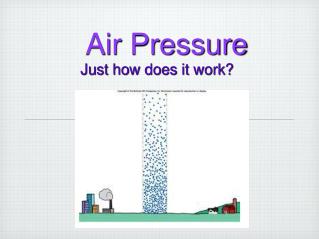
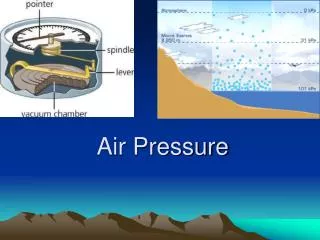
What is Air Pressure ? • The weight of the atmosphere above a location per unit of area • Measured in atmospheres, millimeters of Mercury or Millibars • Standard Atmospheric Pressure (at Sea Level) = 1 atmosphere= 14.7 psi • 760 mm or 29.92 inches • 1013.25 mb BAROMETER
Factors that Affect Air Pressure • TEMPERATURE- as temperature increases, air pressure decreases ( warm air rises and expands) 2. Amount of WATER VAPOR- moist air weighs less than dry air- water weighs less than Nitrogen or Oxygen molecules 3. ALTITUDE- as you increase elevation, air pressure decreases, there are fewer molecules as you go up
Air Pressure Changes • WARM AIR weighs less than Cold Air warm air rises and expands, less dense • HUMID AIR weighs less than Dry Air water weighs less than Nitrogen or Oxygen gas
Weather Changes with A.P. Changes • FALLING BAROMETER – changeable weather (rain/snow/clouds) warmer, more humid air • RISING BAROMETER good (fair ) weather cooler, drier air