Overcoming Speech Anxiety: Research-Based Strategies for Public Speaking Success
Public speaking anxiety (PSA) is a common challenge many face, characterized by physiological arousal and negative thoughts during presentations. Research indicates that PSA can be classified as both a trait and a state, leading to varying degrees of anxiety in different contexts. Effective treatments include systematic desensitization, cognitive modification, and skills training. It’s essential to normalize these feelings, practice regularly, and choose topics wisely. This guide provides strategies for understanding and managing PSA, benefiting both individuals and educators in supporting anxious speakers.

Overcoming Speech Anxiety: Research-Based Strategies for Public Speaking Success
E N D
Presentation Transcript
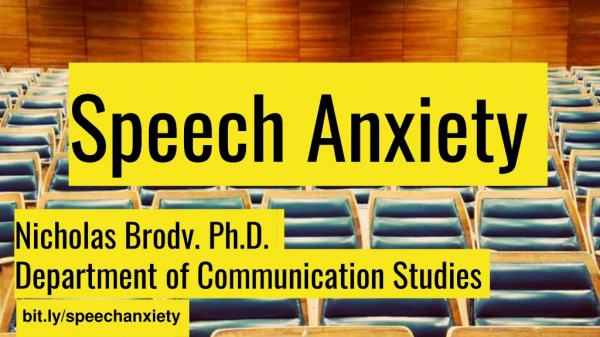
Speech Anxiety Nicholas Brody, Ph.D. Department of Communication Studies bit.ly/speechanxiety Image src: Flickr user Aimless Aim
Is public speaking more feared than death? (Dwyer & Davidson, 2012)
A communication-based anxiety in which individuals experience physiological arousal, negative cognitions, or behavioral responses to real or anticipated presentations (Daly et al., 2009) Fear of public speaking
Systematic desensitization Cognitive modification Skills training (Allen et al., 1989)
Interventions Realize it is normal Analyze your specific fears Practice, Practice, Practice Topic selection Analyze context and audience Reframe Relaxation/Visualization techniques
Assess Take the PRPSA.
Brainstorm What can you do in your classes to assist students with SA?
Practice Impromptu speeches
Thank you. nbrody@pugetsound.edu @nbrody