Download
1 / 10
100 likes | 224 Vues
This resource delves into anarchism as a political belief that views government as unnecessary and often harmful. It clarifies common misconceptions, such as the false notion that anarchism equates to chaos or disorder. The material also highlights the historical context of anarchism, particularly through the lens of the CNT (Comite Nacional de Trabajadores) and its establishment in Barcelona in 1919. Additionally, it examines key differences between anarchism and socialism across various domains, including law, taxation, and social equality.

E N D
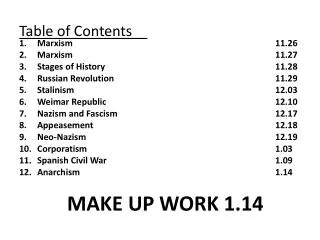
Table of Contents • Marxism 11.26 • Marxism 11.27 • Stages of History 11.28 • Russian Revolution 11.29 • Stalinism 12.03 • Weimar Republic 12.10 • Nazism and Fascism 12.17 • Appeasement 12.18 • Neo-Nazism 12.19 • Corporatism 1.03 • Spanish Civil War 1.09 • Anarchism 1.14 MAKE UP WORK 1.14
Anarchism ___1.14 Agenda: • Do Now • Notes • Video • Group Readings • Video • TTL
Anarchism • Political belief that gov’t is unnecessary and harmful • Anarchism does NOT mean: • no laws, crime, or punishment (disorder) • “every man for himself”
CNT • ComiteNacional de Trabajadores • National Committee of Workers • Anarchist trade union org est. in Barcelona (Catalonia) in 1919. • Trade union:
police freedom of speech taxes presidential elections military freedom of assembly use of violence bureaucracy churches corporations stock market new technologies patriotism social equality redistribution of property
Homework (Due Tuesday 1.15) • Terms Review