The Future of Cloud Computing: Access, Efficiency, and Cost Savings
Cloud computing represents a next-generation technology that offers ultimate access to information, transforming how businesses operate. With its vast potential for cost savings and more efficient communication, companies are increasingly adopting cloud solutions. Although IT departments have been evolving over the past two years, many are still learning to harness its full capabilities. Cloud computing could replace traditional hardware, software, and personal IT support, making it particularly beneficial for small businesses. Overall, cloud computing is proving to be an effective solution for modern business challenges.

The Future of Cloud Computing: Access, Efficiency, and Cost Savings
E N D
Presentation Transcript
Cloud Computing Danielle Heller Andrew Perdick Lindsey Crits
Cloud • Next generation of technology • Ultimate access of information • Vast potential 3. Schacklett, Mary. “Cloud Computing.” World Trade Jan. 2011: 16-19. Business Source Premier. Web. 25 Apr. 2011.
Why? • Better access to information • Cost Savings • More efficient communication 3. Schacklett, Mary. “Cloud Computing.” World Trade Jan. 2011: 16-19. Business Source Premier. Web. 25 Apr. 2011.
When? • Ready for use now • Began more than 2 years ago • IT departments still learning 1. Martin, R. and Hoover, J. Nicholas. “Guide to Cloud Computing” 21 June 2008. <http://www.informationweek.com/news/services/hosted_apps/208700713?pgno=1> InformationWeek.com. 25 April 2011
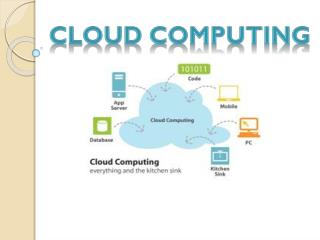
Would Replace: • Hard drives • Advanced hardware • Reduces costs • Software/software licenses • Servers/databases/digital storage devices • Personal IT support 5. Strickland, Jonathan. "How Cloud Computing Works" 08 April 2008. HowStuffWorks.com.
Companies • 4. Sowinski, Lara. “Cloudy No More.” World Trade 20 Dec. 2010: 7. Business Source Premier. Web. 25 Apr. 2011. • 3. Schacklett, Mary. “Cloud Computing.” World Trade Jan. 2011: 16-19. Business Source Premier. Web. 25 Apr. 2011. 2. Rosenbaum, David. “Can Cloud Computing Clear the Air.” CFO Apr. 2011: 25-26. Business Source Premier. Web. 25 Apr. 2011.
Threats • IT departments: • Lower costs • Small businesses vs. large • 3. Schacklett, Mary. “Cloud Computing.” World Trade Jan. 2011: 16-19. Business Source Premier. Web. 25 Apr. 2011.
Success? • Yes, especially in small businesses • Already implemented f
References • 1. Martin, R. and Hoover, J. Nicholas. “Guide to Cloud Computing” 21 June 2008. <http://www.informationweek.com/news/services/hosted_apps/208700713?pgno=1> InformationWeek.com. 25 April 2011 • 2. Rosenbaum, David. “Can Cloud Computing Clear the Air.” CFO Apr. 2011: 25-26. Business Source Premier. Web. 25 Apr. 2011. • 3. Schacklett, Mary. “Cloud Computing.” World Trade Jan. 2011: 16-19. Business Source Premier. Web. 25 Apr. 2011. • 4. Sowinski, Lara. “Cloudy No More.” World Trade 20 Dec. 2010: 7. Business Source Premier. Web. 25 Apr. 2011. • 5. Strickland, Jonathan. "How Cloud Computing Works" 08 April 2008. HowStuffWorks.com. • <http://computer.howstuffworks.com/cloud-computing.htm> 25 April 2011. • 6. Sultan, Nabil Ahmed. “Reaching for the Cloud: How SMEs Can Manage.” International Journal of Information Management 31.3 (2011): 272-278. Business Source Premier. Web. 25 Apr. 2011.