Viruses
Explore the realm of viruses and their classification, reproduction cycles, and role in causing various diseases. Learn about viral structures, host ranges, epidemics versus pandemics, vaccinations, viroids, and prions. Discover how viruses blur the line between living and non-living entities.
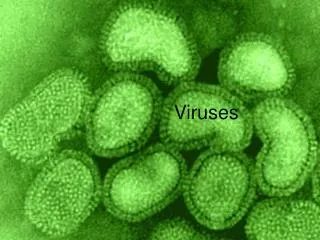

Viruses
E N D
Presentation Transcript
Living vs. Non-Living? • Organization (Cells) • Metabolism • Responsiveness • Growth • Reproduction • Evolution • Ecology
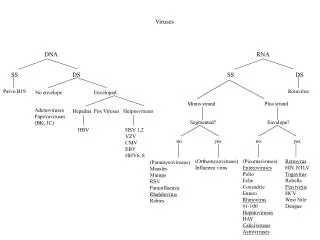
Examples of Viral Diseases • common cold, chicken pox, AIDS, cholera, rabies, influenza, hepatitis B, cold sores, measles, mumps, pneumonia, etc. • hepatitis C & links to liver cancer • many animal & plant viruses
Epidemic vs. Pandemic • limited vs. widespread (usually global) geographic region • Have you seen this film? • http://www.youtube.com/watch?v=4sYSyuuLk5g
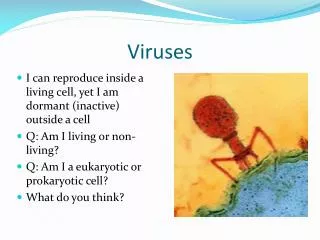
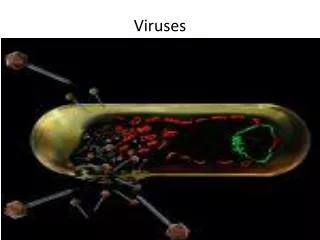
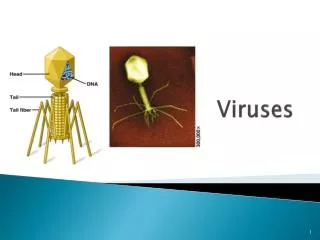
Host Range • most are very specific • some can infect many species • bacteriophage infects bacteria cells
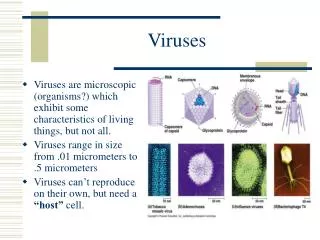
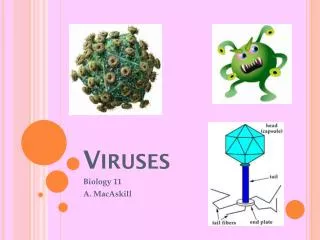
Basic Structure • protein capsid • genetic material (DNA or RNA)
Viral Reproduction • lytic cycle (lysis) • lysogeny (dormancy)
Vaccinations • global elimination of smallpox by WHO in 1980 • human papillomavirus (HPV) & connection to cervical cancer
Viroids • small infectious pieces of RNA without capsid • discovered in 1971 • responsible for some plant diseases
Prions • abnormally-shaped infectious proteins • cause rare diseases in mammals • consumption of infected animals causes prions to enter blood and travel to brain