Extended Scope Placements
130 likes | 255 Vues
Extended scope placements offer students the chance to work beyond traditional occupational therapy roles. These placements take place over the second semester of Year 2, where students work in pairs or small groups for three days a week within a placement setting, returning to university two days a week. Students focus on developing interventions tailored to the needs of service users with onsite supervision guiding their professional development. This experience enriches their educational journey, enhances communication skills, and prepares them for versatile roles in the healthcare environment.


Extended Scope Placements
E N D
Presentation Transcript
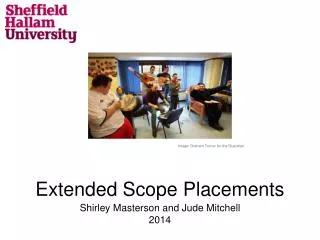
Extended Scope Placements • Image: Graham Turner for the Guardian Shirley Masterson and Jude Mitchell 2014
What do you know about extended scope / role emerging placements?
1. Development of occupational therapy role and intervention • 2. Professional communication
Overview? • Enables students to experience working outside the established role of an occupational therapist. • Students will go out in pairs (or groups of three), working three days a week in the placement setting. • They will return to University two days per week for the duration of the placement. • Students will be required to develop an occupationally focussed intervention within the extended scope setting, • They will receive a wide range of support • Students will be supported by an onsite supervisor who will oversee induction, day to day performance and contribute to the assessment of the student's • The placement runs in the second semester of year 2
FAQ #1 What are the benefits? • You • Organisations • Students • Service Users • Profession
FAQ #2 Do I get paid? • East Midlands - will pay long arm supervisor and organisation, will be worked out pro rata • Yorkshire and Humber - will pay educator and NHS organisation not non-NHS organisation.
FAQ #3 How far do supervisors influence the interventions? • Students are assessed on their ability to scope the needs of the service users so are expected to come up with ideas themselves. • Supervisors can offer suggestions and guidance but will need to understand that the student will make a decision based upon their own ideas and understanding of the service user’s needs • Supervisors could offer a broad outline or suggestions e.g. link with community, provide activity etc.
FAQ #4 What are the supervision arrangements?