
Uploaded by
gareth-barry
1 SLIDES
129 VUES
10LIKES
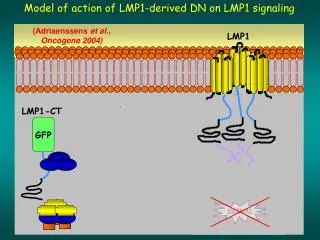
Understanding the Action Model of LMP1-Derived DN on LMP1 Signaling Pathways
DESCRIPTION
This article examines the action model of LMP1-derived dominant negative (DN) mutants on LMP1 signaling mechanisms. Specifically, it explores the role of LMP1 cytoplasmic tail (LMP1-CT) and its interactions with signaling molecules like TRAF and TRADD. The findings contribute to our understanding of LMP1's role in oncogenic signaling and potential therapeutic targets in virus-associated cancers, as discussed by Adriaenssens et al. in their 2004 study published in Oncogene.
Download
1 / 1
Télécharger la présentation 
Understanding the Action Model of LMP1-Derived DN on LMP1 Signaling Pathways
An Image/Link below is provided (as is) to download presentation
Download Policy: Content on the Website is provided to you AS IS for your information and personal use and may not be sold / licensed / shared on other websites without getting consent from its author.
Content is provided to you AS IS for your information and personal use only.
Download presentation by click this link.
While downloading, if for some reason you are not able to download a presentation, the publisher may have deleted the file from their server.
During download, if you can't get a presentation, the file might be deleted by the publisher.
E N D
Presentation Transcript
Model of action of LMP1-derived DN on LMP1 signaling LMP1-CT GFP SIGNAL SIGNAL RIP (Adriaenssens et al., Oncogene 2004) LMP1 TRAF TRADD TRAF



![[PDF] Free Download The House on Tradd Street By Karen White](https://cdn4.slideserve.com/8244080/slide1-dt.jpg)
More Related