Enhancing Technology Education at Pathways to Technology MHS: A Collaborative Project Approach
160 likes | 275 Vues
This presentation by Dennis Barham and Kim Davis outlines the innovative Project-Based Learning (PBL) approach at Pathways to Technology Magnet High School in Hartford, CT. With an enrollment of approximately 350 students (grades 9-12), the school focuses on comprehensive technology instruction including web development, programming, and digital media. Highlights include the Mountain Classroom project, a unique collaboration fostering environmental education. The presentation showcases audience analysis exercises, logo design breakout sessions, and student web prototypes, emphasizing effective learning through teamwork and inquiry.


Enhancing Technology Education at Pathways to Technology MHS: A Collaborative Project Approach
E N D
Presentation Transcript
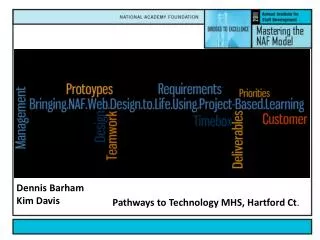
Dennis Barham Kim Davis Pathways to Technology MHS, Hartford Ct.
Outline • Introductions • About our school • Project Background • First Breakout • Second Breakout • Student samples • Website Project Demo • What we learned - Good News • What we learned – Improvement Opportunities • Q & A
Pathways to Technology • Grades 9 – 12 • Approximately 350 students • All students receive technology instruction; • Graphics, E-commerce, Web Development, Digital Video, Sound Production, Programming and then choose a specialty • College Prep (96% placement rate)
Project Background –Mountain Classroom • Mountain Classroom is the project of Mr. Alan Spier, a retired lawyer and long time outdoorsman • The project is a collaboration of the Hartford Public School system, The Appalachian Mountain Club, and the Trust for a Mountain Classroom • Approximately 40 students travel to New Hampshire for 4 days to study the environment – free of charge • The project completed it’s sixth year this Spring
Starting the Project –What NOT to do • PBL 101 ….How not to run a project (video)
First Breakout –Audience Analysis • Audience Analysis identifies the groups that will utilize a web site • Let’s try a simple technique to complete this task
First Breakout –Audience Analysis • Think about www.ups.com • What groups of people would use or visit the UPS site?
First Breakout –Audience Analysis • Rules for Brainstorming: • Postpone and withhold your judgment of ideas • Encourage wild and exaggerated ideas • Quantity counts at this stage, not quality • Build on the ideas put forward by others • Every person and every idea has equal worth
Second Breakout –Logo Design • A quality web site functions, but is also attractive and well designed • Let’s examine the guidelines for graphics design • Graphics Design Guidelines
Second Breakout –Logo Design • Federal Express had several ad campaigns; • Here are some samples Fedex Ads • Your assignment is to sketch out a design for the Fedex campaign “The World, on time” that recognizes the principles of design
Second Breakout –Logo Design • The next approach is called a “gallery walk” • Tour the room and after seeing everyone’s work, assign one of your dots to each one: • Blue – best Yellow - 2nd best Red - 3rd best Here are some student samples
Student Samples • This is a sample of a student produced prototype of the site. • Every student produced one of these Web Site Prototype
Project Demo –Final Website • The actual project is presently on the internet at http://mtnclassroomhfd.org Production Web Site
What we learned – Good News • Problem Based Learning works! • A project focuses on the skills acquired in Web Design • Student “ownership” drove the project • Learning is facilitated by student inquiry • Getting to work is never a problem • Classes began with customer updates and project pointers • Small teams are key
What we learned – Improvement Opportunities • Formal training lessons for all project jobs • Weekly Rubrics for grading and feedback • Electronic Brainstorming • Teamwork and collaboration training