
Enhancing Pipeline Safety: Effective Marking Practices to Prevent Natural Gas Facility Damages
This report highlights critical strategies for preventing damages to natural gas facilities, emphasizing the importance of effective pipeline marking practices. By increasing awareness through visible markers, communities can protect themselves while improving the image of natural gas infrastructure. Key recommendations include curb and pavement markers at urban and rural road crossings, offset markers, and extended-length markers in areas with high vegetation. Proper marking not only prevents incidents but also ensures safe interactions in various environments such as industrial and recreational areas.

Enhancing Pipeline Safety: Effective Marking Practices to Prevent Natural Gas Facility Damages
E N D
Presentation Transcript
36% Damages to natural gas facilities not preceded by a locate request *CGA DIRT Report
Visibility = Awareness Awareness = Protection
Using Effective Pipeline Marking Practices • Prevent Damages • Protect the Community • Improve image
Urban Road Crossing • Curb Markers at intersection • Pavement marker on centerline • Road markers in traffic lanes
Urban Pipeline Under Roadway • Curb Markers at intersection and every 250 feet • “Offset” markers • Road markers in traffic lanes
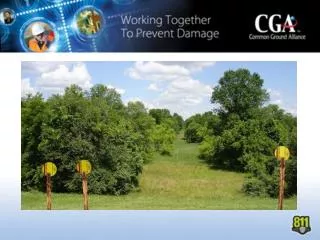
Rural Road Crossing • Marker post with API sign and decals at intersection • Marker post with decals for LOS • Extended length markers for areas with high vegetation
Urban LOS • Rural LOS • Industrial areas • Recreational ROW • Agricultural ROW Pipeline Marking Scenarios • Water crossing • Railroad crossing • Suburban subdivisions • HCAs • Retail/Office parks
Thank You! Chris Thome Rhino Marking and Protection Systems cthome@rhinomarkers.com www.RhinoMarkers.com www.DamagePreventionProfessional.com