Download
1 / 13
130 likes | 249 Vues
This research explores the photosynthetic capabilities of Zooanthellae within sea anemones, focusing on pigment types such as carotenoids and chlorophyll. We discuss experimental designs to measure photosynthesis output across different depths, addressing the pros and cons of shallow vs. deep water habitats for sea anemones. The mutualistic relationship allows anemones to acquire essential nutrients while providing Zooanthellae with protection. Through controlled experiments, we aim to isolate PS pigments and understand their role in the anemone's survival.

E N D
Sea Anemone Research Tying Anemones to Photosynthesis
Background Info about the research Photosynthesis
Background: Pigments Carotenoid Chlorophyll If we shine ROYIV on carotenoids, what would happen? If we shone GB on chlorophyll, what would happen?
Can’t We all Just Get Along • Symbiosis- When 2 organisms live in close proximity to one another • Mutualism - When both organisms benefit from one another
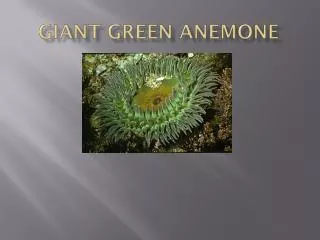
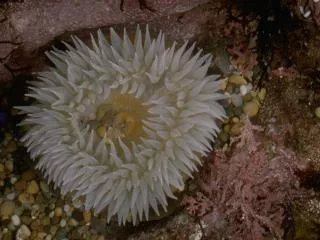
Sea Anemones and Zooanthellea Sea anemones and Zooanthellea (Photosynthetic Micro-organism) = Mutualism Sea anemone gets food and oxygen Zooanthellea gets protection and calcium
Question #1: What type of pigments do zooanthellea utilize? • How can we isolate the PS pigments? (Chlorophyll treatment vs Carotenoid treatment) • How can we measure PS output of zooanthellea once these treatments are established?
Your Task • In small groups brainstorm an experimental design that we can use to test which type of pigment is being utilized by zooanthellea • Make sure to define your experimental variable (only 1 variable), experimental groups (chlorophyll group + Carotenoid group), and a control group. • How will you assign sea anemones to each of these groups so that the process is random?
Sea anemones and ocean depth • Shallow water • Pros: More light is available (Can rely on PS of zooanthellae to supplement diet) • Cons: Better chance of being eaten or dried up (tides) • Deep water • Pros: Less chance of being eaten or dried up • Cons: Less light (Cannot rely on PS of zooanthellae to supplement diet)
Depth of water and Light availability • As you go deeper into the ocean, you begin to lose different colors of light Surface 5 Meters deep 15+ Meters Deep
Background: Pigments Carotenoid Chlorophyll If we shone RIV on carotenoids, what would happen? If we shone GB on chlorophyll, what would happen?
Question 2: What is the optimal sea depth for a sea anemone??? • Take into account Pro’s and Con’s associated with shallow and deep depths • Take into account type of pigment the zooanthellae is utilizing • Where should we expect to find these sea anemones?