Download
1 / 28
280 likes | 403 Vues
This text delves into the specifics of ionic and covalent bonding, discussing the transfer and sharing of electrons between atoms. It highlights the characteristics of resonance structures and the unique behavior of hydrogen in bond formation. The text compares the polarity and strength of CO and CF bonds, along with the properties of polar and nonpolar molecules. Additionally, it clarifies the shape of H2O and PH3, the distribution of valence electrons, and the energy dynamics when bonds form, providing a comprehensive overview of molecular chemistry.

E N D
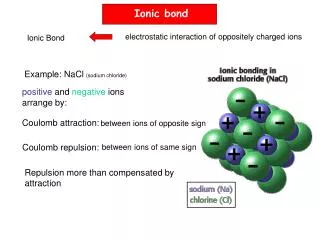
The Ionic bond exists between atoms that __________________ electrons.
The covalent bond is formed because of an attraction between __________________________.
The negative valence electrons of one atom and the positive nucleus of another atom.
Label the partial positive and partial negative dipoles on the Si—S bond.
Potential energy is the _________when a bond is formedand the atoms are stable.
Potential energy is the LOWESTwhen a bond is formedand the atoms are stable.
The bond energy is LARGER when the bond length is SMALLER.OR The bond energy is LESS when the bond length is GREATER.
Nonpolar.Even though the bondsare each polar covalent, the oxygen are equally spaced around carbon. This means the electrons are equally distributed throughout the molecule and there is no dipole.