CRRT Mike Gass CCA Technical Advisor
140 likes | 275 Vues
This report outlines critical lessons learned from Cuba’s Global Response Network (GRN) regarding effective spill response strategies. It emphasizes the need to formalize cascading agreements for equipment and personnel, validates methods like controlled burning and dispersants, and highlights the importance of increasing skimming operation encounter rates. The document discusses shortages, operational team formations, and various collection methods for near-shore and offshore recovery. Additionally, it addresses regulatory aspects related to export licenses, travel restrictions, and necessary training for better contingency planning.


CRRT Mike Gass CCA Technical Advisor
E N D
Presentation Transcript
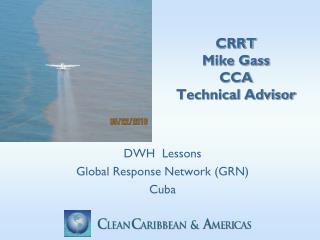
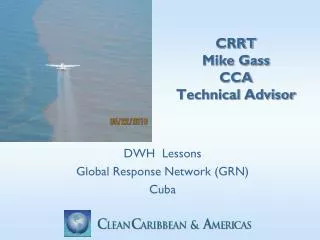
CRRTMike GassCCATechnical Advisor DWH Lessons Global Response Network (GRN) Cuba
DWH Lessons • Formalize “Cascading Agreements” for equipment and personnel • Controlled burning validated • Dispersant (surface/subsurface) validated • Increase encounter rate for skimming operations • Offshore boom shortage
Dave Salt, OSR Portland Oregon, 2011
GRN formation of five Operational Teams (“OT”s) • Offshore Collection and Recovery • Near-shore and Shoreline Collection and Recovery • Dispersants • In-Situ Burning • Spill Management Systems
Export License: U.S. Department of Commerce, Bureau of Industry and Security. Export is authorized to a specific end user, and is limited to specific items of equipment. CCA CANNOT send the ADDS or any other spray or transfer systems, PPE, or igniters for in-situ burning, but CAN send dispersant and other equipment specifically listed on the license.
Travel License: • U.S. Department of the Treasury, Office of Foreign Assets Control. • Travel is restricted to certain individuals • CCA’s current license authorizes travel associated with Repsol, PC Gulf Ltd. (Petronas), and other exploration and production companies that become CCA members in the future . • Training/Exercises/Contingency Planning • CCA Staff Multiple trips • Response • Full-time CCA employees, consultants or agents (no specifically named individuals) Multiple trips