Download
1 / 3
30 likes | 121 Vues
A DSP-enabled microsystem featuring a 128-site electrode array and back-end electronics within a hermetic vacuum package. The device offers 16 channels, expandable architecture, and multiple operating modes for programming, stimulation, test, and sleep. Measured results showcase efficient power consumption, making it ideal for cochlear implants. Designed with TSMC 0.18mm MM/RF bulk CMOS technology.

E N D
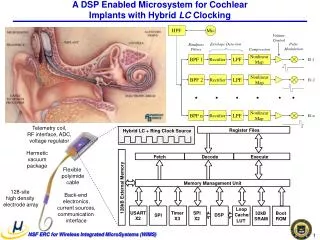
Telemetry coil, RF interface, ADC, voltage regulator Hermeticvacuumpackage Flexible polyimide cable 128-site high density electrode array Back-end electronics,current sources,communication interface A DSP Enabled Microsystem for Cochlear Implants with Hybrid LC Clocking
CIS DSP Core • 16 channels • Expandable architecture • Reduced datapath width • 3MHz operation with 22kHz front-end ADC • 3,000 pulses per second per channel maximum • Four operating modes • Programming • Stimulation • Test • Sleep
3.03mm Microsystem Measured Results • TSMC 0.18mm MM/RF bulk CMOS • 1.79mW from 1.2V is lowest reported DSP power consumption • Add 22kHz 16-bit ADC in future