
Nano-Science: Fuel Cells, Drug Delivery, and Bio-Medical Applications

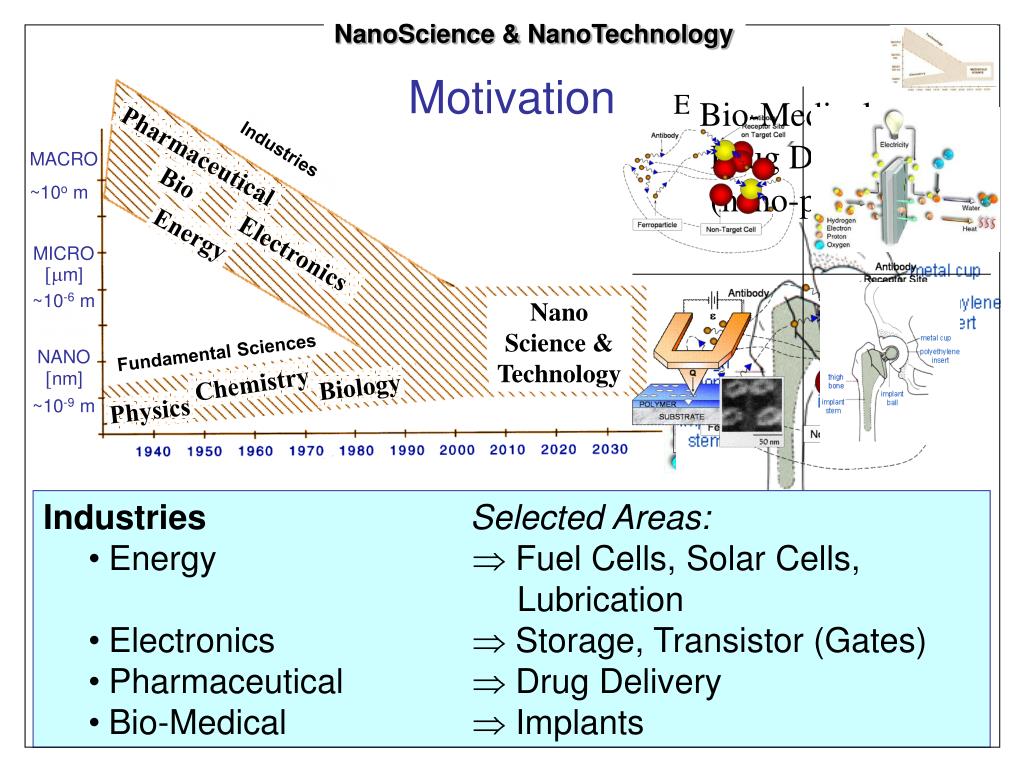
Nano-science and nano-technology with applications spanning multiple industries. Key areas include energy solutions like fuel and solar cells, cutting-edge electronics in storage and transistors, and pharmaceutical innovations centered around targeted drug delivery systems. Additionally, it addresses bio-medical applications featuring nano-implants and enhances understanding of nanocellular growth mechanisms, particularly on nanopatterned surfaces. This synthesis highlights the potential of nanotechnology to revolutionize various sectors through structured and directed growth techniques.
Télécharger la présentation 
Politique de téléchargement : le contenu du site vous est fourni TEL QUEL pour votre information et votre usage personnel ; il ne peut être vendu, concédé sous licence ni partagé sur d’autres sites sans l’accord de son auteur.Le contenu vous est fourni TEL QUEL, pour votre information et votre usage personnel uniquement. Téléchargez la présentation en cliquant sur ce lien. Lors du téléchargement, si vous ne parvenez pas à télécharger une présentation, l’éditeur a peut-être supprimé le fichier de son serveur.Pendant le téléchargement, si vous ne parvenez pas à obtenir une présentation, le fichier a peut-être été supprimé par l’éditeur.
F I N