Economic Boom and Bust: Analyzing the Impact of the 1920s Market on America
The 1920s witnessed an economic boom characterized by soaring stock prices and businesses expanding production. The allure of buying on margin, coupled with unregulated practices like insider trading, fueled rapid growth. However, overproduction by farmers and high tariffs, such as the Hawley-Smoot Tariff, led to market imbalances. The stock market crash of October 1929 triggered the Great Depression, causing mass unemployment and business failures. The ensuing bank runs highlighted the fragility of the economic system, fundamentally altering American society and consumer behavior.

Economic Boom and Bust: Analyzing the Impact of the 1920s Market on America
E N D
Presentation Transcript
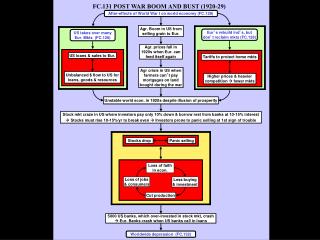
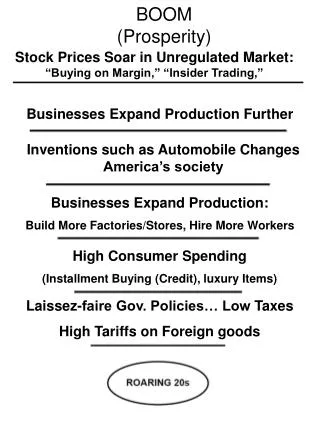
Stock Prices Soar in Unregulated Market:“Buying on Margin,” “Insider Trading,” Businesses Expand Production Further BOOM(Prosperity) Inventions such as Automobile Changes America’s society Businesses Expand Production: Build More Factories/Stores, Hire More Workers High Consumer Spending (Installment Buying (Credit), luxury Items) Laissez-faire Gov. Policies… Low Taxes High Tariffs on Foreign goods
The Circular Flow of Economic Activity Labor $ Businesses (Producers/ Employers) Workers/ Consumers $ Products
Bust(Great Depression) Farmers Produce Surplus in 1920s… Low Crop Prices
Bust(Great Depression) Farmers Produce Surplus in 1920s… Low Crop Prices Decline in Construction of New Homes Domestic Demand Begins to Drop Investors Buy U.S. Stocks Instead of Lending to Europe Europeans Can’t Afford to Buy American Products (Tariffs)
Tariff Increases Hawley-Smoot Tariff (1930) October 1929… President Hoover publicly pledged to sign the Hawley-Smoot Tariff which would raise tariffs on some goods as high as 60%.
Bust(Great Depression) Farmers Produce Surplus in 1920s… Low Crop Prices Decline in Construction of New Homes Domestic Demand Begins to Drop Investors Buy U.S. Stocks Instead of Lending to Europe Europeans Can’t Afford to Buy American Products (Tariffs) Businesses Cut Back on Production… Lay Off Workers Domestic Demand Drops Even More Businesses Overvalued… Stock Market Crashes
The Stock Market Crash October 24: “Black Tuesday,” Dow Jones Dropped 12.8% as 16.4 million shares were traded October 29: “Black Thursday,” Dow Jones Dropped an additional 12%, losing $14 billion in value Total Losses were $30 billion in one week (10 times the Federal Budget in 1929)
Bust(Great Depression) Farmers Produce Surplus in 1920s… Low Crop Prices Decline in Construction of New Homes Domestic Demand Begins to Drop Investors Buy U.S. Stocks Instead of Lending to Europe Europeans Can’t Afford to Buy American Products Businesses Cut Back on Production… Lay Off Workers Domestic Demand Drops Even More Businesses Overvalued… Stock Market Crashes Stock Investors Can’t Repay Loans to Banks
Bank Runs Banks Only Keep a Fraction of Depositors’ Cash on Hand… Banks Cannot Give Everyone Their Money at the Same Time
Bust(Great Depression) Farmers Produce Surplus in 1920s… Low Crop Prices Decline in Construction of New Homes Domestic Demand Begins to Drop Investors Buy U.S. Stocks Instead of Lending to Europe Europeans Can’t Afford to Buy American Products Businesses Cut Back on Production… Lay Off Workers Domestic Demand Drops Even More Businesses Overvalued… Stock Market Crashes Stock Investors Can’t Repay Loans to Banks Bank “Runs” Occur as Banks Run Out of Cash
Bust(Great Depression) Farmers Produce Surplus in 1920s… Low Crop Prices Decline in Construction of New Homes Domestic Demand Begins to Drop Investors Buy U.S. Stocks Instead of Lending to Europe Europeans Can’t Afford to Buy American Products Businesses Cut Back on Production… Lay Off Workers Domestic Demand Drops Even More Businesses Overvalued… Stock Market Crashes Stock Investors Can’t Repay Loans to Banks Bank “Runs” Occur as Banks Run Out of Cash Panicked Consumers Stop Spending/Investing
Bust(Great Depression) Farmers Produce Surplus in 1920s… Low Crop Prices Decline in Construction of New Homes Domestic Demand Begins to Drop Investors Buy U.S. Stocks Instead of Lending to Europe Europeans Can’t Afford to Buy American Products Businesses Cut Back on Production… Lay Off Workers Domestic Demand Drops Even More Businesses Overvalued… Stock Market Crashes Stock Investors Can’t Repay Loans to Banks Bank “Runs” Occur as Banks Run Out of Cash Panicked Consumers Stop Spending/Investing Businesses Fail
Unemployment 1/3 of the Nation Becomes Unemployed!
Bust(Great Depression) Farmers Produce Surplus in 1920s… Low Crop Prices Decline in Construction of New Homes Domestic Demand Begins to Drop Investors Buy U.S. Stocks Instead of Lending to Europe Europeans Can’t Afford to Buy American Products Businesses Cut Back on Production… Lay Off Workers Domestic Demand Drops Even More Businesses Overvalued… Stock Market Crashes Stock Investors Can’t Repay Loans to Banks Bank “Runs” Occur as Banks Run Out of Cash Panicked Consumers Stop Spending/Investing Businesses Fail Unemployment Increases