Understanding the Black Death: Causes, Impact, and Responses (1347-1351)
180 likes | 324 Vues
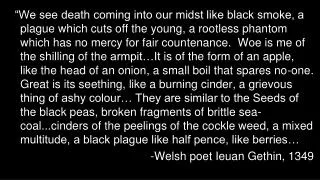
The Black Death, which devastated Europe from 1347 to 1351, was preceded by significant socio-economic factors, including the Great Famine of 1315-1317 that left populations weakened and vulnerable. This period saw severe climate changes that resulted in crop failures, contributing to a demographic crisis. As the plague swept through, it enacted a catastrophic mortality rate of 35% to 70%, claiming approximately 25 million lives. Exploring this period reveals its profound political, economic, and social effects, as well as the responses, including medicine, art, and the societal consequences of immense loss.


Understanding the Black Death: Causes, Impact, and Responses (1347-1351)
E N D
Presentation Transcript
The Black Death 1347 - 1351 Ms. Susan M. Pojer Edited by A. ElmoreHorace Greeley HS Chappaqua, NY
The Famine of 1315-1317 • By 1300 Europeans were farming almost all the land they could cultivate. • A population crisis developed. • Climate changes in Europe produced three years of crop failures between 1315-17 because of excessive rain. • As many as 15% of the peasants in some English villages died. • One consequence ofstarvation & povertywas susceptibility todisease.
The Symptoms Bulbous Septicemic Form:almost 100% mortality rate.
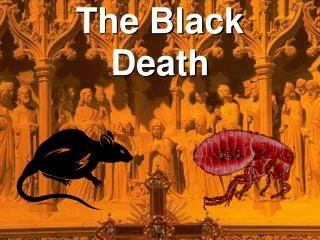
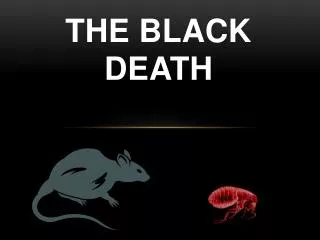
The Disease Cycle Flea drinks rat blood that carries the bacteria. Bacteria multiply in flea’s gut. Human is infected! Flea bites human and regurgitates blood into human wound. Flea’s gut cloggedwith bacteria.
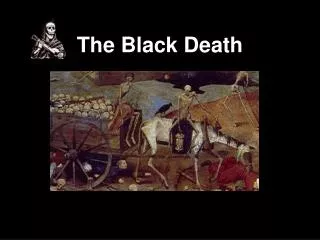
Medieval Art & the Plague Bring out your dead!
Medieval Art & the Plague An obsession with death.
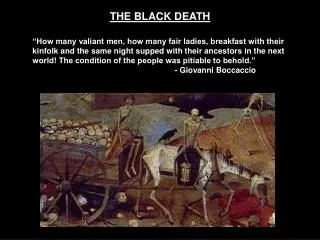
Boccaccio in The Decameron The victims ate lunch with their friends and dinner with their ancestors.
Attempts to Stop the Plague “Leeching” A Doctor’s Robe
Attempts to Stop the Plague Flagellanti:Self-inflicted “penance” for our sins!
Attempts to Stop the Plague Pogramsagainst the Jews “Golden Circle” obligatory badge “Jew” hat
The Mortality Rate 35% - 70% 25,000,000 dead !!!
What were thepolitical,economic,and social effectsof the Black Death??