The Future of Modular Warehouse Construction
0 likes | 9 Vues
<br><br>Modular warehouse construction is revolutionizing the industry with its cost-efficiency, speed, and sustainability. Using prefabricated components, it enables faster assembly, scalability, and reduced waste. This innovative approach supports businesses in adapting to changing demands, enhancing flexibility, and achieving eco-friendly solutions, making it the future of efficient, adaptable, and green infrastructure.


The Future of Modular Warehouse Construction
E N D
Presentation Transcript
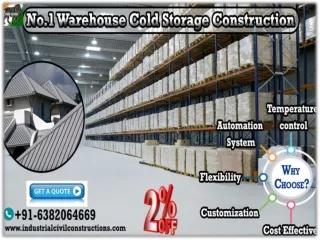
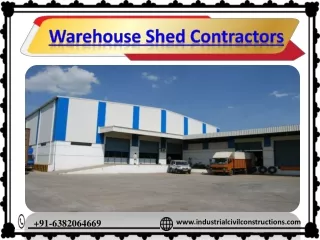
Introduction to Modular Warehouse Construction Modular warehouse construction has gained significant traction in recent years due to its flexibility, cost-effectiveness, and speed of construction. As the demand for warehouses increases, particularly in industries like e-commerce, manufacturing, and logistics, modular designs are quickly becoming a preferred choice. Warehouse construction companies in Chennai are increasingly adopting modular designs to meet the rising demand for efficient, scalable, and sustainable warehouse solutions.
The Rise of Modular Construction in the Warehouse Sector Modular construction is not a new concept, but its adoption in the warehouse sector has rapidly accelerated in recent years. The growing need for flexible, scalable, and quick-to-build storage solutions has made modular design an attractive option. With modular warehouses, businesses can easily expand or reconfigure their spaces without the significant cost or disruption of traditional construction methods.
Advantages of Modular Warehouse Construction Speed and Efficiency - One of the primary benefits of modular warehouse construction is the speed at which these structures can be built. Since a significant portion of the construction is done off-site in a controlled environment, the assembly on-site is faster and less impacted by weather or other delays. Scalability and Flexibility - Modular warehouses are highly scalable, offering the ability to easily add more units or reconfigure existing spaces as business needs evolve. This is particularly important for industries that experience seasonal fluctuations in demand or need to quickly adapt to changes in their supply chain.
Modular Warehouse Design Considerations Structural Integrity and Durability While modular warehouses are built with efficiency in mind, they are designed to meet the same durability and safety standards as traditional warehouse constructions. These structures are engineered to withstand heavy loads, weather conditions, and long-term use, ensuring their reliability. Customization Options Modular warehouse designs offer a high degree of customization. Businesses can choose specific configurations, such as varying ceiling heights, door placements, and racking systems, to create a space that best suits their operational needs.
The Future of Modular Warehouse Construction As modular warehouse construction continues to grow in popularity, future developments in this field are expected to bring even greater benefits. Advancements in technology, such as 3D printing, robotics, and automation, will likely enhance the speed and precision of modular builds. With the ability to integrate new technologies, modular warehouses will become even more efficient and future-proof.
Conclusion: The Road Ahead for Modular Warehouse Construction The future of modular warehouse construction looks bright, with continued innovation and growing adoption across various industries. As businesses increasingly prioritize flexibility, scalability, and speed, modular designs will play a pivotal role in meeting these needs. By offering faster construction timelines, cost savings, and the ability to scale, modular warehouses are poised to reshape the way warehouses are built and utilized in the coming years.