Download
1 / 1
10 likes | 136 Vues
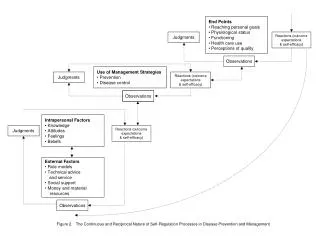
This article explores the multi-faceted nature of personal goal achievement in health management. It delves into physiological status, health care utilization, and quality perceptions that shape individual outcomes. Emphasizing the impact of intrapersonal factors like knowledge, attitudes, and beliefs, it examines how external influences such as role models and social support contribute to effective disease prevention and management strategies. The reciprocal nature of self-regulation processes is highlighted, showcasing the significance of outcome expectations and self-efficacy in achieving better health results.

E N D
End Points • Reaching personal goals • Physiological status • Functioning • Health care use • Perceptions of quality Judgments Reactions (outcome expectations & self-efficacy) Observations • Use of Management Strategies • Prevention • Disease control Judgments Reactions (outcome expectations & self-efficacy) Observations Observations • Intrapersonal Factors • Knowledge • Attitudes • Feelings • Beliefs Judgments Reactions (outcome expectations & self-efficacy) • External Factors • Role models • Technical advice • and service • Social support • Money and material • resources Observations Figure 2. The Continuous and Reciprocal Nature of Self-Regulation Processes in Disease Prevention and Management