Effective Client Collaboration: Analysis, Editing, and Deliverables in Document Management
This guide outlines the essential steps for successfully working with clients through the analysis, editing, and final delivery of documents. It covers content organization, visual design, and style consistency. Key responsibilities include scheduling tasks, categorizing editing needs, meeting client expectations, and managing contracts. It emphasizes the importance of communication through conferencing, active listening, and setting clear goals. Gain insights into tracking documents, assessing editing time, and maintaining relationships, ensuring a successful collaboration with your clients.


Effective Client Collaboration: Analysis, Editing, and Deliverables in Document Management
E N D
Presentation Transcript
Working with a Client ENG353
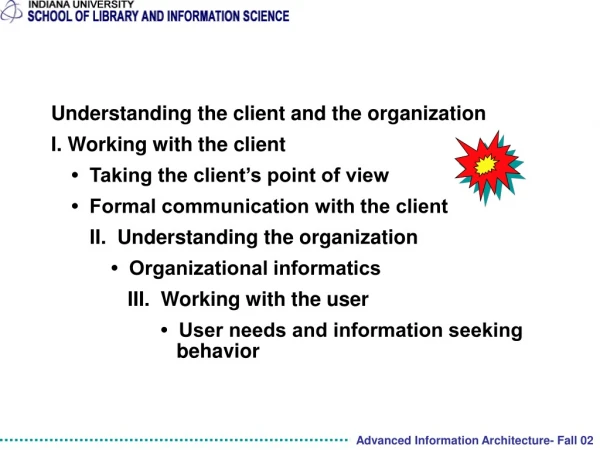
Analysis and Evaluation • Analyze • Content Organization Visual design Style Illustrations
Objective/Deliverable • Following your analysis, you make your objectives. • EX: Edit style to insure consistency • The product you deliver the client is your deliverable—the finished edited product.
Schedule/Responsibilities • Categorize your tasks. • EX: Editing text, production (preparing pages0 • EX: Meeting with client • Preliminary meeting • Develops shared understanding
Scheduling due dates • Work backward from necessary date and stagger due dates. • Tracking the document • Report • Received • Copyedited • Writer proof • Editor’s check • Final revisions
The Contract • Editing agreement • Document title • Date submitted • Date due • Length • Form submitted • Visuals • …
The Contract, Cont • Editing required • Spelling, grammar, punctuation • Consistency • Match of cross-references, figure nos., etc. • Completeness of parts • Accuracy of terms, numbers, etc. • Visuals • …
More on the Contract • Organization • Document Design • Style: tone, diction, sentence structure, globalization • Copymarking for graphic design • Preparation of production-ready pages • Preparation of production-ready visuals
Still more… • Online editing acceptable? • Estimates of time: hours working days • Milestone (review) dates • Handoff date • Intellectual property • Conditions, if any
Assessing time • Examples • Step-by-step procedures—4–5 hrs per procedure • Glossary terms/defs.--0.75 hours per term • Reference topics—3-4 hrs. per topic • Revising existing text—1-3 hrs per page • Editing—6-8 pages per hour • Project management—10-15% of all other activities
Sampling • Averages of time should be accompanied by reviews of sample pages. • To do this— • 1. Skim entire document to determine number of pages of text, illustrations, etc. • 2. Edit sample pages (Ex: the first 2 or 3 pages of two chapters & pages with technical information) • 3. On the basis of the time it takes you to do this work, estimate the entire editing job.
Conferencing • Face-to-face meetings ideal • Set the tone for your relationship • If heavy editing, additional conference • Nonverbal cues to diminish anxiety—nodding of the head, smiling
Conferencing II • Before you meet, create plan and goals. • An overview statement • Identify topics and goals • Review of edited document • Don’t have to call attention to every emendation • Goal—Verify your editing is correct for client
Conferencing III • Keeping a good relationship • Active listening • “Are you saying that…” • “Please go on…” • “Please explain how…” • “How does this point relate to…”
Conferencing III • Keeping a good relationship • Active listening • “Are you saying that…” • “Please go on…” • “Please explain how…” • “How does this point relate to…”
Conferencing IV • Use positive language • Instead of “wordy”— • Instead of “poorly organized”—