Download
1 / 8
80 likes | 212 Vues
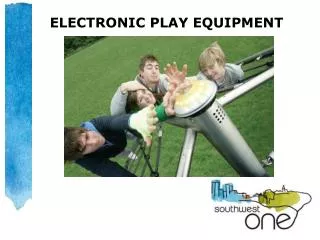
Over the past few years, electronic play equipment has emerged as a fun way to encourage children to exercise. Major play companies have developed devices aimed at the gaming generation, making fitness feel like play. This new wave of equipment includes the Lappset Smartus from Finland, Playworld Neos from America, and Wicksteed PlayAlive from the UK, each offering creative and competitive features. These systems utilize technology, such as gamer cards and solar power, to keep children active while they enjoy interactive gameplay without realizing they are exercising.

E N D
Introduction • Electronic play equipment has been developed over last 3-4 years in response to the need to encourage children to exercise more. • Most major play companies have developed a range. Some based on existing play equipment, some completely new. • Intended to be ‘stealth-fitness’. Make it so much fun that the children don’t think of it as exercise! • Designed to appeal to the computer game playing generation. • Additional links to ICT away from the playground with use of websites to record scores and bespoke packages to design new games.
Three Case Studies • The Finnish Solution = Lappset Smartus • The American Solution = Playworld Neos • The British Solution = Wicksteed PlayAlive
Lappset Smartus System • Based on a central game control unit with remote ‘i-posts’ • Uses a gamer card system for personalised score recording • Linked to a website for recording scores and competing with other schools or parks around the world • Comes with a design package for children to create their own games • Co-developed with Nokia • Wifi and 3G compatible • Can be solar powered
Playworld Neos • Claims to be the first electronic outdoor play equipment • Range of 3 units for different size spaces • Nine video game style activities and games • Wide range of colour options • Games based on logic, aerobic activity and stamina • Can be solar powered
Wicksteed PlayAlive System • Play Equipment Based, can be used without electronic element • Based around 3 games initially, with the option for future upgrades or for children to design their own games • Uses buttons called ‘satellites’ with LED lights to control games • Satellites can play music • Can be powered by solar panel or wind turbine • Estimated that on average children use between 100-220Kcal for each 15 minute use
FEEL FREE TO CONTACT US FOR ADVICE Chris Winn – Landscape Architectcrwinn@somerset.gov.ukMichelle Martin – Landscape Architectmmartin1@somerset.gov.ukTel: 01823 356271