Download
1 / 5
0 likes | 1 Vues
This PDF guide compares saddle stitching and flat stitching to help print units choose the correct binding approach. It explains how a book wire stitching machine enhances productivity and finishing quality in printing & packaging machinery environments. Guru Nanak Printing Machines Mfg. Co. builds machines designed for stable and consistent stitching output.

E N D
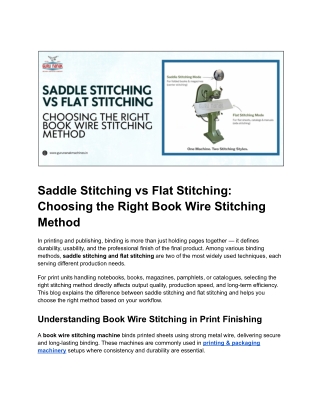
Saddle Stitching vs Flat Stitching: Choosing the Right Book Wire Stitching Method In printing and publishing, binding is more than just holding pages together — it defines durability, usability, and the professional finish of the final product. Among various binding methods, saddle stitching and flat stitching are two of the most widely used techniques, each serving different production needs. For print units handling notebooks, books, magazines, pamphlets, or catalogues, selecting the right stitching method directly affects output quality, production speed, and long-term efficiency. This blog explains the difference between saddle stitching and flat stitching and helps you choose the right method based on your workflow. Understanding Book Wire Stitching in Print Finishing A book wire stitching machine binds printed sheets using strong metal wire, delivering secure and long-lasting binding. These machines are commonly used in printing & packaging machinery setups where consistency and durability are essential.
Modern wire stitching machines allow flexibility through reversible tables and adjustable stitching heads, enabling both saddle and flat stitching on the same machine — a major advantage for print units handling varied job requirements. What Is Saddle Stitching? Saddle stitching binds sheets through the center fold. The sheets are placed over a saddle-shaped support, and wire stitches are applied along the fold. Best suited for: ● Magazines ● Booklets ● Brochures ● Pamphlets ● Thin notebooks Key advantages: ● Clean and professional finish ● Ideal for folded documents ● Faster setup for lightweight jobs ● Common in commercial printing Saddle stitching works best when page count is limited and sheets are folded before binding. What Is Flat Stitching? Flat stitching binds sheets from the side, without folding them. The pages remain flat and are stitched along one edge. Best suited for:
● Notebooks ● Books ● Catalogues ● Manuals ● Currency notes and registers Key advantages: ● Higher stitching capacity ● Stronger binding for thicker jobs ● Flat opening for easy handling ● Better durability for frequent use Flat stitching is preferred when documents need to remain flat or when thickness exceeds typical saddle stitching limits. Saddle Stitching vs Flat Stitching – Comparison Table Feature Saddle Stitching Flat Stitching Stitching Position Center fold Side edge Page Handling Folded sheets Flat sheets Thickness Capacity Low to medium Medium to high Durability Moderate High Typical Applications Magazines, brochures Books, notebooks, catalogues Setup Flexibility Quick Adjustable Output Finish Clean & lightweight Strong & firm Choosing the Right Stitching Method for Your Print Unit
The right stitching method depends on: ● Type of printed material ● Page thickness ● Production volume ● Durability requirement Print units that handle multiple job types benefit most from machines that support both saddle and flat stitching, eliminating the need for separate equipment. Role of Machine Features in Stitching Quality A reliable book wire stitching machine must support precision, safety, and consistency. Machines built by experienced manufacturers focus on real production needs such as: ● Thickness adjustment by wheel for varied jobs ● Reversible table for side & center stitching ● Stitching capacity from 2 mm to 16 mm ● Power-operated performance for smooth operation ● Safety guard for operator protection ● Standardized & interchangeable spare parts ● Wire compatibility: 21, 22, 24 & 26 SWG These features ensure stable output even during extended production runs. Why Print Units Prefer Versatile Wire Stitching Machines Instead of limiting production to one binding style, print units increasingly prefer machines that allow easy switching between saddle and flat stitching. This flexibility improves workflow efficiency, reduces downtime, and supports diverse client requirements without additional investment.
Experience That Reflects in Machine Design With over six decades of hands-on manufacturing experience, Guru Nanak Printing Machines Mfg. Co. designs book wire stitching machines that focus on strength, consistency, and long-term reliability. Built for continuous use, their machines support both saddle and flat stitching with stable performance, making them suitable for commercial printing and publishing environments. Final Thoughts Both saddle stitching and flat stitching play important roles in print finishing. The right choice depends on job type, thickness, and usage requirements. Investing in a versatile book wire stitching machine that supports both methods ensures better productivity, consistent quality, and long-term value for print units. +91 99888 61777 | https://gurunanakmachines.in/