Understanding the Meaning of Auditory and Linguistic Prefixes in English
This educational resource explores the prefixes "audi" and "loqu," focusing on their meanings related to hearing and speaking. Engage with interactive questions that help define concepts such as audibility, the roles of an audience, the function of a ventriloquist, and the nature of a soliloquy. Discover how these terms connect to the broader themes of sound and communication, and enrich your vocabulary with relevant examples and detailed explanations.


Understanding the Meaning of Auditory and Linguistic Prefixes in English
E N D
Presentation Transcript
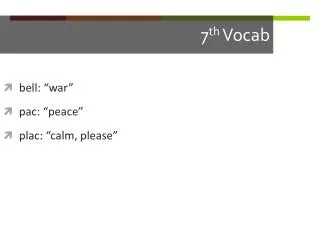
7th Vocab audi, audit loqu, locut
Answer the questions to figure out the meaning of the prefixes. 1. Describe what it means when a speaker is barely audible. 2. Define the words audio, audience, and auditorium. What meaning do they share? 3. Describe what a ventriloquist does for a living. 4. What does it mean when someone delivers a soliloquy?
audible: able to be heard audio: hearing audience: people gathered to listen auditorium: a room for listening ventriloquist: someone who talks from their belly and makes a puppet appear to talk soliloquy: a speech delivered by a person talking alone
audi, audit: “hear, listen” loqu, locut: “speak, talk”
Explain how these words mean “hear, listen” audiotape audiovisual audible able to hear audiocassette inaudible ‘not’ able to hear audition the act of hearing; trying out for a part audit the act of hearing; examination of an account auditor one who hears; account examiner
eloquent circumlocution colloquialism interlocuter *the use of many words to ‘talk’ ‘around’ and not address a topic *‘speaking’ ‘out’ with flowing words *informal oral expression used when people ‘talk’ ‘together’ *one who takes turns in ‘talking’ ‘between’ others
elocution a ‘speech’ someone speaks ‘out’ somniloquist someone who ‘talks’ in their ‘sleep’ loquacious talkative locution the way people ‘speak’ in a specific region