Industrial Revolution: The Transformation of Manufacturing with Machines
A detailed overview of the Industrial Revolution, focusing on the shift from handcrafting to machine-led manufacturing, particularly in textiles. Discover how this period in history revolutionized production, led by innovations like interchangeable parts and mass production. Explore how the landscape of work changed, from the Lowell System to the rise of trade unions and labor reform efforts. Learn about the impact of the Transportation Revolution, with advancements like steamboats and railroads that transformed travel and commerce. Experience the challenges faced, such as dangerous working conditions and accidents, while witnessing the growth of industries and cities in the North.


Industrial Revolution: The Transformation of Manufacturing with Machines
E N D
Presentation Transcript
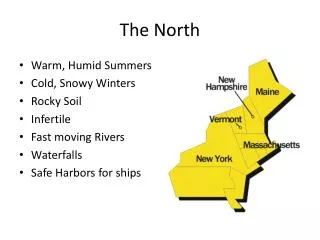
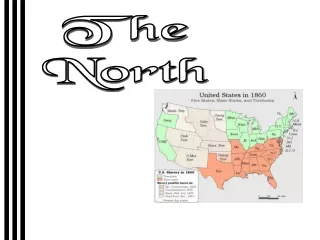
The North http://youtu.be/3Efq-aNBkvc
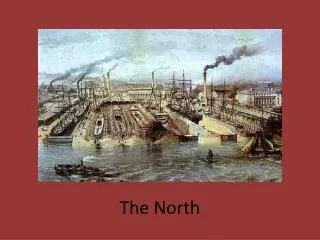
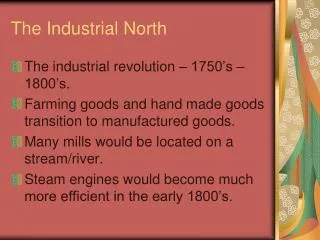
Industrial Revolution • Most people were farmers • Made goods by hand • Industrial revolution: rapid growth in manufacturing using machines • Textiles: cloth items • Begins in Britain and moves to U.S. • Machines use water power
Population growth • Creates a demand for goods
Eli Whitney • Textile mills were located in the North • South concentrated on expanding farming • Eli Whitney: How to make guns faster? Interchangeable Parts!!
Interchangeable parts • Interchangeable parts: parts of a machine that are identical • Easier to assemble • Easier to replace broken parts • Sped up production of goods • Mass Production: the efficient production of large numbers of identical goods • Things no longer needed to be made by hand!
Britain is the first to industrialize • Make cheep goods • U.S. – want to rely less on foreign goods. We were too dependent of foreign goods • We need to be able to meet our own needs • Don’t want to be week and open to attack • “With Peace and Commerce, America Prospers.” • High tariffs on foreign goods
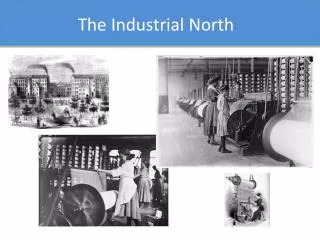
Changes in Working Life • You didn’t need to be a craftsman, anyone could work in the mill • Children, adults, sometimes whole families worked in a mill • Read page 391
Lowell System • Lowell was a businessman from New England • Lowell system was based on water power • Textile mills • Employed young unmarried women • Spin thread and weave cloth at the same time • Boarding houses, and meals • Women wanted a chance to earn money
Workers Organize • Long days, 12-14 hours • Health problems • Dangerous • Children • Low wages • http://youtu.be/u-PSRAA5oD4
Beginning of Trade Unions • Craftspeople felt threatened • Factories produced low priced goods • Trade Unions: groups that tried to improve pay and working conditions • Employers: higher cost of union employees prevented competition • Strike: Workers refuse to work • Most early strikes were not successful • Why?
Labor Reform Efforts • Sarah G. Bagley: founded the Lowell Female Labor Reform Association • Publicized the struggles of factory laborers • Investigation of working conditions • 10 hour workday • 1845 Sarah Bagley was elected vice president of the New England Working Men’s Association
The Transportation Revolution • Transportation Revolution: A period of rapid growth in the speed and convenience of travel • Creates a boom in business • Shipping time and costs • Steamboat • Steam powered trains • Goods, people and information could move rapidly and efficiently across the U.S.
Steamboats • Robert Fulton • Well suited for river travel • Did not rely on wind power • Could travel upstream • Increased trade = more profits • By 1840 more than 500 steamboats were in use
Railroads • Peter Cooper built a small, powerful locomotive called the Tom Thumb
Challenges • Mountains, curves, rivers • Drove the economy • Steel • Coal • Timber • Transportation • Freight/goods/food • Risky: trains often derailed and their were fires
Wealth continued to be centered in the North • Towns sprang up • Cities grew • Demand for coal increases which drives mining • http://youtu.be/xwU35U_aGP0 • http://www.msha.gov/fatals/fabc2013.asp • http://en.wikipedia.org/wiki/List_of_coal_mining_accidents_in_China • http://worldnews.about.com/od/disasters/tp/Worlds-Worst-Mining-Disasters.htm
Promote a New Product • Come up with a jingle • http://youtu.be/O6Ky6NXMUJo