Understanding Organ Donation: Facts, Processes, and Impact
120 likes | 232 Vues
This comprehensive overview explores the vital topic of organ and tissue donation, including its significance, procedures, and impact on individuals and families. Key points include the legalities surrounding organ donation in the United States, differences between living and deceased donors, and the significant number of lives that can be saved through donations. The process from declaration of brain death to the recipient's surgery is outlined, highlighting the ethical aspects and overall benefits of donating organs. Together, we can foster a greater understanding of this life-saving choice.


Understanding Organ Donation: Facts, Processes, and Impact
E N D
Presentation Transcript
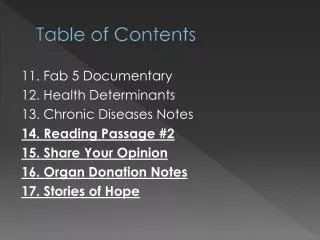
Table of Contents 11. Fab 5 Documentary 12. Health Determinants 13. Chronic Diseases Notes 14. Reading Passage #2 15. Share Your Opinion 16. Organ Donation Notes 17. Stories of Hope
Organ/Tissue DonationNotes • A heart on a NC driver’s license indicates you want to be a donor • It is illegal to buy or sell organs and tissues for transplantation in the United States • The type of medical care you receive is not influenced by your designation as a donor
Organ/Tissue DonationNotes • Rich and famous people do not receive donated organs/tissues quicker than others • Majority of religions encourage organ and tissue donation • An organ donor can still have a customary funeral and an open casket, if desired
Organ/Tissue DonationNotes • There are 2 types of donors: living and deceased • One organ and tissue donor can save, or improve, the lives of 50 people or more • More than 100,000 people are on the national transplant waiting list right now • A new name is added to the list every 13 minutes
Organ/Tissue DonationNotes • Every 27 minutes someone receives an organ transplant • Blood donors must be 17 years old • 16 with parent permission • Kidney transplants are more successful when the donor and recipient are from the same ethnic or racial background
Organ/Tissue DonationNotes • Medical factors used in determining who receives an organ transplant: • Size of organ • Blood type • Degree of illness
Organ/Tissue DonationNotes • At the end of the donation process, general information about the recipients of donated organs are given to the family • The recipient’s family picks up the medical costs from the organ banks for organ recovery and surgery. No expenses to the donor’s family
Organ Donation Process • Patient is declared “brain dead” • Deceased patient’s family is contacted • Patient remains on ventilator • Tests are completed to determine which organs can be donated
Organ Donation Process cont. • A recipient is located through the United Network for Organ Sharing and the donor will undergo surgery • The body is prepared for the funeral home • Letters are sent to the donor’s family with general information about the recipient, excluding names