Understanding Earth's Atmosphere: Composition, Layers, and Energy Transfer
270 likes | 394 Vues
The atmosphere is a vital mixture of gases surrounding the Earth, primarily composed of 78% nitrogen, 21% oxygen, and 1% other gases, including argon and carbon dioxide. It insulates the Earth and maintains a temperature suitable for life. The atmosphere consists of four layers: the troposphere, stratosphere, mesosphere, and thermosphere, each defined by temperature changes. Energy in the atmosphere is transferred through radiation, conduction, and convection, significantly affecting weather patterns and contributing to the greenhouse effect, which impacts global temperatures.


Understanding Earth's Atmosphere: Composition, Layers, and Energy Transfer
E N D
Presentation Transcript
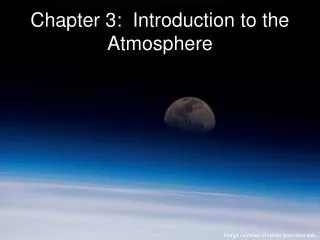
The Atmosphere • A mixture of gases surrounding the earth • Insulates the earth, maintaining a temperature that allows living things to survive
composition • Nitrogen – 78% • Oxygen – 21% • Other – 1% ( argon, CO2, methane CH4, H2O) • Solids: dust, soil, salt, ash, skin, hair, pollen, • bacteria, viruses, aerosols (liquid droplets)
Pressure • Atmosphere (gasses have mass) pulled toward earth by gravity • Atmosphere is more dense near the surface • Pressure decreases as you increase altitude
Layers of Atmosphere (4)-based on temperature changes • Troposphere – nearest the earth to 18 km • Site of weather • Most dense layer • Temperature decreases as altitude increases
Layers of Atmosphere • Stratosphere – 18 km – 50 km • Temperature rises as altitude rises • Contains ozone layer (traps UV energy & warms the air). Ozone O3
Layers of Atmosphere • Mesophere – 50 km – 80 km • Coldest layer -93 degrees C
Layers of Atmosphere • Thermosphere – 80 km – 550 km • Temperatures above 2000 degrees C. N & O absorb solar radiation. Not hot, because molecules do not strike each other & transfer heat. • N & O absorb radiation & become charged (ions) Ions radiate light forming aurora borealis (Northern Lights)
Energy in the atmosphere • How is energy transferred in the atmosphere? • What is energy? • What forms do energy take?
How is energy transferred? • Heat likes to move from a heat source to a heat sink. • Radiation is movement of energy in electromagnetic waves (light)
Energy transferred in 3 ways: • Radiation: across space • Conduction: flows from warm object to cold object • Convection: air currents unequal heating of atmosphere
Heating the atmosphere • Solar energy (electromagnetic radiation) travels to earth in waves • 50% reaches the earth’s surface • 5% reflected by the surface of the earth • 20% absorbed by ozone, clouds, gases • 25% scattered & reflected by clouds & atmosphere
Movement of air • Convection current causes weather
Greenhouse effect • Gases in atmosphere (CO2, CH4, H2O, nitrous oxide) trap light energy & warms the air, radiating heat back to earth • Loss of greenhouse gases would cause earth to cool • Increases in CO2 cause earth to warm (global warming)