Download
1 / 1
20 likes | 137 Vues
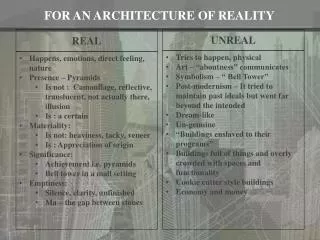
This article delves into the philosophy of architecture as a bridge between reality and illusion, examining how physical structures communicate through symbolism and significance. We explore the impacts of post-modernism, where past ideals are maintained yet expanded beyond their original visions. The discourse includes the emotional resonance of space, the authenticity in materiality versus the superficiality of cookie-cutter designs, and the tension between functionality and beauty. We highlight examples such as the "Bell Tower" and pyramids, revealing the emptiness and clarity that can coexist in architectural expression.

E N D
For an Architecture of Reality REAL UNREAL • Tries to happen, physical • Art – “aboutness” communicates • Symbolism – “ Bell Tower” • Post-modernism – It tried to maintain past ideals but went far beyond the intended • Dream-like • Un-genuine • “Buildings enslaved to their programs” • Buildings full of things and overly crowded with spaces and functionality • Cookie cutter style buildings • Economy and money • Happens, emotions, direct feeling, nature • Presence – Pyramids • Is not : Camouflage, reflective, translucent, not actually there, illusion • Is : a certain • Materiality: • Is not: heaviness, tacky, veneer • Is : Appreciation of origin • Significance: • Achievement i.e. pyramids • Bell tower in a mall setting • Emptiness: • Silence, clarity, unfinished • Ma – the gap between stones