Essential Guide to Fostering Animals: Types & Responsibilities
Welcome to the fostering training program led by Jenna Bell, our Volunteer & Foster Coordinator. This presentation covers vital information on various foster situations including pregnant animals, underage or orphaned kittens and puppies, sick or injured animals, and bottle feeders. Learn the basics of fostering, including feeding, loving care, disease prevention, and understanding your responsibilities. You’ll also find guidance on socializing underage animals and ensuring a safe, nurturing environment for both mothers and their young. Thank you for considering making a difference!
Essential Guide to Fostering Animals: Types & Responsibilities

E N D
Presentation Transcript
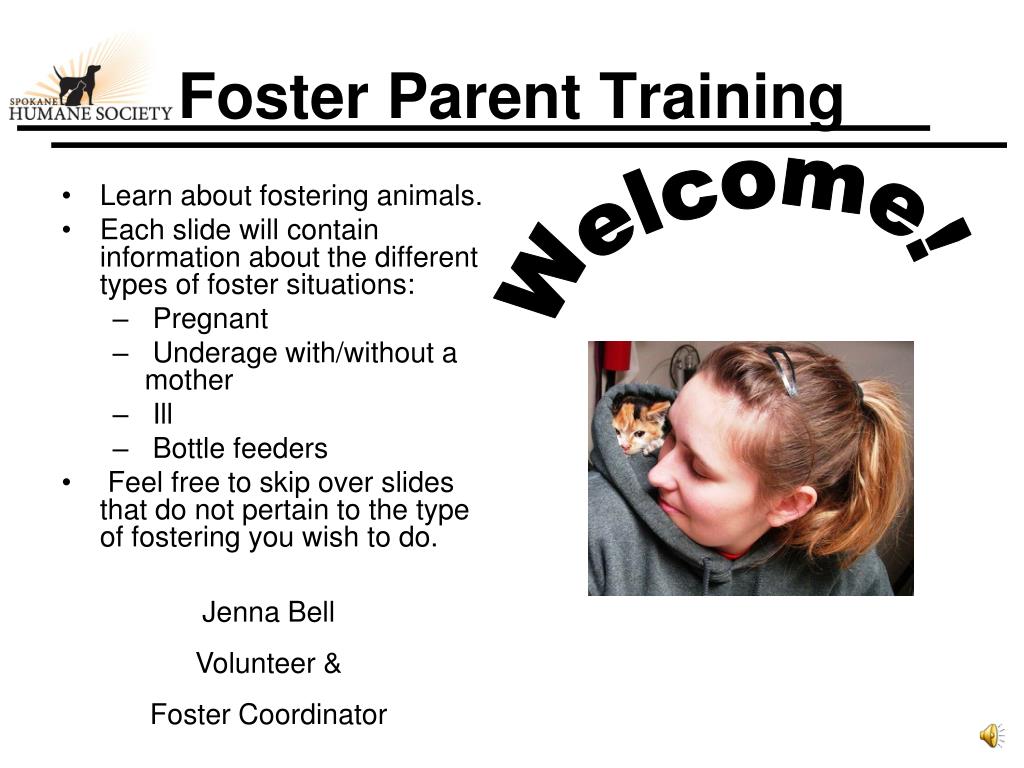
Foster Parent Training • Learn about fostering animals. • Each slide will contain information about the different types of foster situations: • Pregnant • Underage with/without a mother • Ill • Bottle feeders • Feel free to skip over slides that do not pertain to the type of fostering you wish to do. Welcome! Jenna Bell Volunteer & Foster Coordinator
Fostering Basics • Feed, water & LOVE! • Prevent disease spread! • Read your foster handbook!
Fostering Basics • Foster needs are emailed. • First willing foster parent will be given the foster opportunity. • Foster animal pick up. • Log your foster hours. • Promote your foster animals!
Underage Animals Without Mothers Kittens & Puppies 5 weeks or older • Easiest to foster. • Heavy socialization needed. • Will not split up litters. • Not completely vaccinated.
Underage animals with mothers • Good moms take care of their young. • Watch out for mothers pushing babies away. • Can become a bottle feeding situation – please make sure to view that slide. • Be careful! Some mothers can be very protective!
Pregnant animals • Most animals will give birth with little to no assistance. • If your foster animal appears to be struggling please call a staff member! • Make sure they have a quite room and a some sort of enclosed box if they wish. • Be careful! New mothers can become very protective! • Not all newborns survive. • Call the shelter to report how many babies your foster animal had.
Sick or Injured animals • Inured animals will be sent to foster while they recover • Ill animals are sent to foster for calm environment and treatment. Click here for short video
Bottle fed animals Kittens & Puppies 5 weeks or younger • Can be very time consuming • Do not always survive • Extremely rewarding
Thank you! • Save this link! • Call if you have any questions! • Watch your email! Thank you for making a difference! Photo courtesy of foster parent Sarah McMaster