
SlideServe
Menu
Préférences
© SlideServe · v2026

Combustion

hateya avatar
11 diapositives · 974 Views · Oct 14, 2014

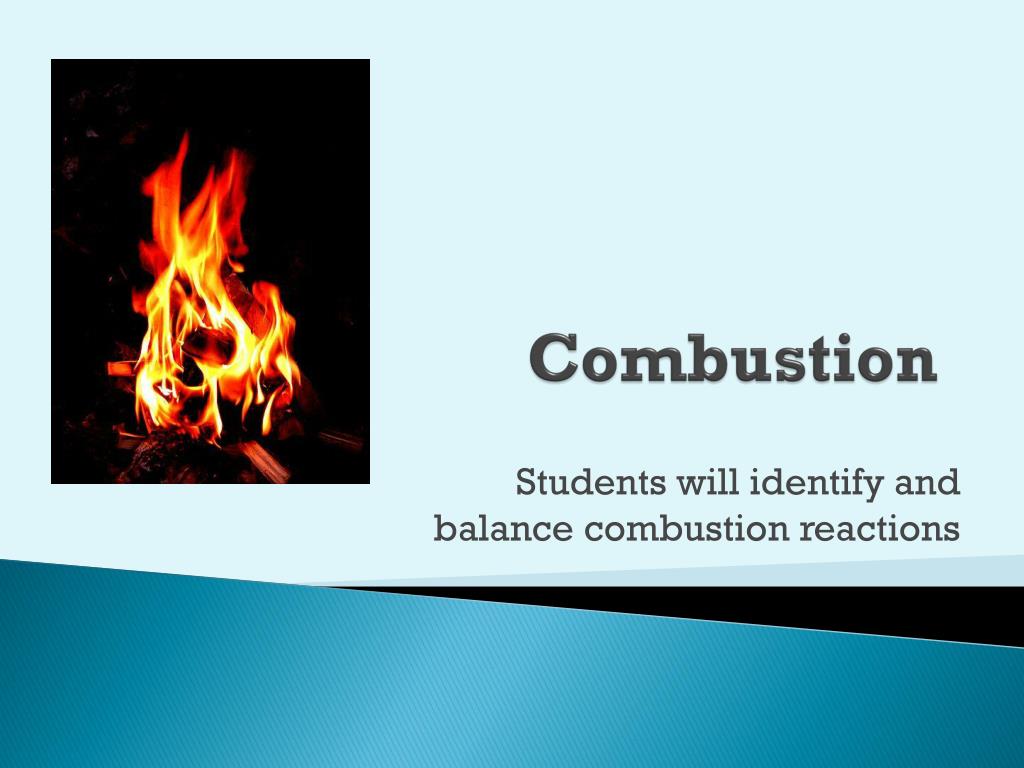
Combustion. Students will identify and balance combustion reactions. What is a Hydrocarbon?. A hydrocarbon is chemical compound that only contains carbon and hydrogen. What is an Alkane ?. An alkane is a hydrocarbon that has the general formula of C X H 2X + 2
Combustion - slide 1
01 / 11Combustion
1 / 17

Télécharger la présentation

Combustion
Une image / un lien ci-dessous est fourni (tel quel) pour télécharger la présentation

Politique de téléchargement : le contenu du site vous est fourni TEL QUEL pour votre information et votre usage personnel ; il ne peut être vendu, concédé sous licence ni partagé sur d’autres sites sans l’accord de son auteur.Le contenu vous est fourni TEL QUEL, pour votre information et votre usage personnel uniquement. Téléchargez la présentation en cliquant sur ce lien. Lors du téléchargement, si vous ne parvenez pas à télécharger une présentation, l’éditeur a peut-être supprimé le fichier de son serveur.Pendant le téléchargement, si vous ne parvenez pas à obtenir une présentation, le fichier a peut-être été supprimé par l’éditeur.

F I N

Plus de contenu associé

Transcription de la présentation
  1. Combustion Students will identify and balance combustion reactions

  2. What is a Hydrocarbon? • A hydrocarbon is chemical compound that only contains carbon and hydrogen

  3. What is an Alkane? • An alkane is a hydrocarbon that has the general formula of CXH2X + 2 • C3H8 and C5H12 are examples of alkanes.

  4. Names of Alkanes • Most alkanes are named after the number of carbon atoms. • The name • C5H12 = pentane • C8H18 = octane

  5. Octane Ratings • These numbers are the fuels octane rating. • The octane rating is the resistance of the fuel to autoignition

  6. Octane Ratings are based on the combustion of these two molecules.

  7. Products in Combustion • The products (if burned in open air) are water and carbon dioxide

  8. DANGER! • When hydrocarbons burn in enclosed areas, they can also produce CO which is a deadly gas.

  9. Why do the bubbles float? • Air is mostly two types of gasses. • N2 which has a mass of 28 grams/mole • O2 which has a mass of 32 grams/mole • Methane (CH4) has a mass of 16grams/ mole • FYI: H2 = 2 grams/ mole is the lightest gas • Propane C3H8 has a mass of 44grams/mole is heavier than air which makes it more dangerous

  10. Why does the gas burn so slowly? • CH4 only has a small window of mixtures that burn. Methane only burns in mixtures between • 4.4 – 15% methane to air • Acetylene burns 2.5 – 82% • See Wikipedia http://en.wikipedia.org/wiki/Flammability_limit

  11. Energy Diagram • The candle supplies the energy to get the methane to start burning. • However, ones it starts, it supplies its own energy to react with the oxygen. POTENTIAL ENERGY