Regions
Regions. May be defined by cultural and physical features. Physical Regions of the US. There are seven major physical regions plus Hawaii. They differ in landforms. Pacific Coast. Mountains - Cascades and Sierra Nevada Dense forests - add beauty

Regions
E N D
Presentation Transcript
Regions May be defined by cultural and physical features
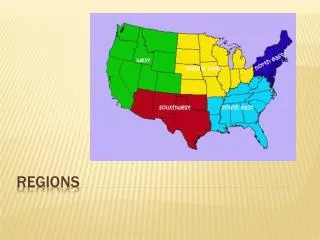
Physical Regions of the US • There are seven major physical regions plus Hawaii. • They differ in landforms.
Pacific Coast • Mountains - Cascades and Sierra Nevada • Dense forests - add beauty • Fertile mountain valleys make farming profitable.
Intermountain Region • Isolated ridges • High plateaus • Deserts • Deep canyons (Grand Canyon) • Limited population
Rocky Mountains • Go from Alaska to New Mexico • Thinly populated • Tourist attractions
Interior Plains • East of Rockies • West of Appalachians • Great Plains - western part • Central Plains - eastern part - wetter more industrialized Farming – important economic activity
Canadian Shield • Most of it is in Canada • Extends into Minnesota, Wisconsin, Michigan • Rich in minerals • Heavily forested • No major cities
Appalachian Mountains • Stretch from Canada to Alabama • Separate Central Plains from Coastal Plains • Rivers have cut very deep valleys or gaps through the mountains
Coastal Plains Touch Atlantic Ocean and Gulf of Mexico Divided in two: Atlantic Plains – in North have Boston/NYC Gulf Plains – in South have Houston and New Orleans rich in oil
Cultural Regions • These are areas that are defined by human aspects not landforms. • Examples: religion language traditions food interests dress