The Prelude to Revolution: Colonial Reactions to British Taxation Policies
30 likes | 184 Vues
The Proclamation Act of 1763 marked the beginning of colonial unrest as British authorities aimed to restrict westward expansion by drawing a boundary along the Appalachian Mountains. Despite the prohibition, many colonists defied the order. The rallying cry of "No Taxation without Representation" rose, led by figures like Samuel Adams, who organized the Committee of Correspondence to protest unjust taxes. Further grievances emerged from acts like the Sugar Act of 1764 and the Stamp Act of 1765, leading to widespread boycotts and the formation of the Sons of Liberty, effectively igniting the flames of revolution.


The Prelude to Revolution: Colonial Reactions to British Taxation Policies
E N D
Presentation Transcript
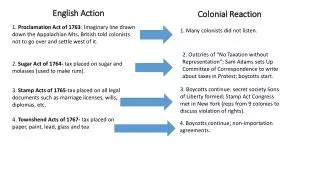
English Action Colonial Reaction 1. Proclamation Act of 1763: Imaginary line drawn down the Appalachian Mts. British told colonists not to go over and settle west of it. 1. Many colonists did not listen. 2. Outcries of “No Taxation without Representation”; Sam Adams sets Up Committee of Correspondence to write about taxes in Protest; boycotts start. 2. Sugar Act of 1764- tax placed on sugar and molasses (used to make rum). 3. Boycotts continue: secret society Sons of Liberty formed; Stamp Act Congress met in New York (reps from 9 colonies to discuss violation of rights). 3. Stamp Acts of 1765-tax placed on all legal documents such as marriage licenses, wills, diplomas, etc. 4. Townshend Acts of 1767- tax placed on paper, paint, lead, glass and tea 4. Boycotts continue; non-importation agreements.
English Action Colonial Reaction 1. Proclamation Act of 1763: Imaginary line drawn down the Appalachian Mts. British told colonists not to go over and settle west of it. 1. Many _____________________________. 2. Outcries of “_____________________________” Sam Adams sets Up Committee of Correspondence to write about taxes in Protest; ________________________start. 2. Sugar Act of 1764- tax placed on sugar and molasses (used to make rum). 3. Boycotts continue: secret society __________________________formed; Stamp Act Congress met in New York (reps from 9 colonies to discuss violation of rights). 3. Stamp Acts of 1765-tax placed on all legal documents such as marriage licenses, wills, diplomas, etc. 4. __________________________continue; non-importation agreements. 4. Townshend Acts of 1767- tax placed on paper, paint, lead, glass and tea