Enhancing Education with Excursions: Benefits and Planning Essentials
50 likes | 172 Vues
Planning excursions is vital for providing hands-on, real-world experiences that enhance students' education, foster positive attitudes towards science, and improve motivation in the subject. They encourage socialization among students, strengthen teacher-student rapport, and allow for diverse learning strategies like cooperative learning. It's important to understand staff ratios—1:20 for day trips, 1:10 for camps, and 1:15 for study camps—while ensuring proper planning with student permissions, safety, and clear objectives. For further guidance, visit the resources provided.


Enhancing Education with Excursions: Benefits and Planning Essentials
E N D
Presentation Transcript
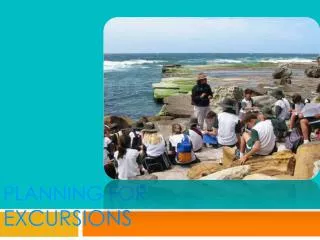
Why use excursions? Hands-on, real world experiences Quality of education, positive attitudes to science and motivation towards the subject Improvement of the socialisationbetween students, which would impinge on the classroom, and development of rapport between teachers and students Enable teachers to utilise other learning strategies such as cooperative learning.
Staff ratios Day excursions 1:20 Camps camps in residential premises or under canvas 1:10 Study camps in residential premises 1:15 Local and interstate tours 1:15 Overseas tours 1:10
Basic Information • Visit the facility • Have a purpose for the excursion • Student permission forms • Know where to go • Who to go see when you arrive • Payment information • Student safety • First aid
Planning and Approval Student safety http://www.education.vic.gov.au/management/governance/spag/safety/excursions/default.htm http://www.education.vic.gov.au/management/schooloperations/edoutdoors/forms.htm Documentation