The Epic of Beowulf: Heroism, Honor, and the Clash of Pagan and Christian Values
"Beowulf," composed by an unknown Anglo-Saxon poet around 750 AD, is a seminal work of epic poetry set in pre-Anglo-Saxon England. The poem explores the tensions between pagan and Christian values, showcasing the heroic code that emphasizes honor through deeds, while juxtaposing Christian ideals of peace and afterlife glory. The narrative follows the hero Beowulf's journey as he confronts monsters and strives for fame, reflecting the societal values of loyalty, revenge, and reputation. Through its rich themes, "Beowulf" offers profound insights into the cultural struggles of its time.

The Epic of Beowulf: Heroism, Honor, and the Clash of Pagan and Christian Values
E N D
Presentation Transcript
Beowulf: Context Review • Composed in England by an unknown Anglo-Saxon poet (c. 750) • Set in Scandinavia just before Anglo-Saxon migration (c. 520) • Celts reside in England during 1st century BC; pegan • Romans (from Italy) invade in the 55 BC; Christian • Angles & Saxons (from Germany) invade in the 5th century; pagan • Vikings(from Scandinavia) invade in the 8th century; pagan • Normans(from France) invade in the 11th century; Christian
Tensions Between Value SystemsHeroic Code, Paganism, and Christianity • Anglo-Saxon invaders experienced a large-scale conversion to Christianity • Though a pagan story, Beowulfwould be told by a Christian poet (poet attempts to attribute Christian thoughts/motives to characters, who frequently behave in un-Christian ways, leading to inconsistencies) • Heroic code maintains that honor is gained during life through deeds, while Christianity asserts that glory lies in the afterlife. • Warrior culture dictates that it is always better to retaliate than to mourn, while Christianity advocates peace and forgiveness.
Review: What is the definition/purpose of epic poetry? Epic poetry is used to portray significant cultural information about the people who created them (religion, gender roles, VALUES, morals, fears, etc.) What is the definition/purpose of HERO’s JOURNEY (monomyth)? The heroic journey is that which occurs in ALL mythical stories, where the hero learns the truth about his world and himself through a journey symbolizing the search for individual identity and the culture’s concept of the idealized member of society.
Beowulf as an Epic Hero: Anglo-Saxon Values • Comitatus: Oath of Camaraderie ~ Loyalty, Generosity, Friendship • Wergild: Revenge & Kinship ~ Justice, Revenge, Family • Fame and Reputation ~ The Nine Noble Virtues
Comitatus Oath Comitatus: relationship between a ruler and his warriors requiring that the thane vow to defend a lord to the death, while in return, the lord provides protection and a share of his wealth. * * * * • Chieftainof the comitatus(small war band) is surrounded by warriors, his comites(companions), who’ve sworn to defend him with their lives. • May seem like a typical warrior defending master relationship, but with each providing services to the other, there is a great deal of camaraderie • The chieftain (or gold-giver) showed symbolic measure of a man's worth by the amount of gold he offered.
Wergild: Revenge & Kinship Wergild: monetary compensation for somebody slain, the value placed on every human being and every piece of property in Anglo-Saxon times. * * * * • Aman's kin were his strongest support in everyday affairsIf killed, it was the duty of his kinsmen to avenge him (eye for an eye) Alternative • Wergild (man-payment) could be accepted by the kindred of the slain man without loss of face because each man's life had a set money value according to his rank and standing in society
Value of Fame • Fameor Praise was the final goal of the heroic life • The Anglo-Saxons had an incomparable sense of the transience and pointlessness of mortal life, only a man's name lived on • Elements that make up the heroic ideal can be seen in the patronymics and cataloging of the Danish kings in the first few paragraphs of Beowulf.
Fame and Pride • The warriors of Beowulf seek fame through feats of bravery in the face of danger, an utter disdain for death; this is emphasized by boasting • The quest for fame can easily succumb to pride. • Fame involves becoming great in order to bring strength/power to one’s people through generosity and community • Pride involves greed, selfishness, and a desire to be great at any cost.
How might the search for fame conflict with these values? Loyalty Hard Working
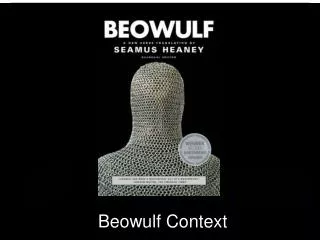
Seamus Heaney • Irish poet • Considered the most important poet in Ireland since Yeats • Awarded the Nobel Prize in Literature in 1995 for his translation of Beowulf
Agenda Characters & Setting