Resolve 404 Page Not Found Errors in WordPress
Master the art of resolving 404 Page Not Found errors in WordPress website development with our concise PDF guide. Discover expert tips and step-by-step solutions to efficiently troubleshoot and eliminate these common errors, ensuring a smooth and frustration-free user experience. <br>

Resolve 404 Page Not Found Errors in WordPress
E N D
Presentation Transcript
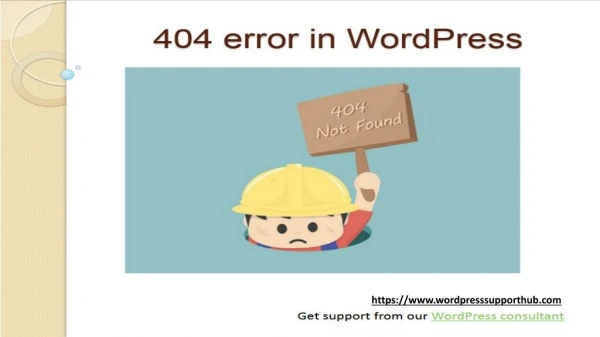
Resolve 404 Page Not Found Errors in WordPress This error indicates that the requested file (picture, page, or post) is missing and has nothing to do with your server. In the context of WordPress theme development, it’s crucial to ensure that your theme is correctly configured to handle media files, pages, and posts. Check Permalink Settings: Go to Settings > Permalinks in your WordPress admin. Ensure that the permalink structure is set correctly. You can try switching to a different structure and then back to the original to refresh the permalink settings. Recreate the .htaccess File: Corrupted .htaccess files can cause 404 errors. You can recreate it by going to Settings > Permalinks and clicking “Save Changes” without making any modifications. Check for URL Typos: Ensure there are no typos in the URL of the page or post that is showing a 404 error. Update the Rewrite Rules: If you have custom rewrite rules in your theme or plugins, they might be causing conflicts. Try updating or disabling them to see if it resolves the issue. Check for Plugin Conflicts: Deactivate all plugins and check if the 404 error persists. If it disappears, reactivate each plugin one by one to identify the problematic plugin. Examine Theme Conflicts: Switch to a default WordPress theme (like Twenty Twenty-One) and check if the 404 error persists. If it disappears, there may be an issue with your theme. Inspect .htaccess File Permissions: Ensure that the .htaccess file has the correct permissions. It should typically be writable by the server (chmod 666) during the permalink structure update and then set back to a more restrictive permission (e.g., chmod 644). Check for Deleted or Moved Pages:
If you are getting 404 errors for specific pages, ensure that the pages exist and are published. Check if they have been accidentally deleted or moved. Reset Permalinks Manually: You can manually reset the permalinks by editing the .htaccess file. Add the following code at the end: Check Server Configuration: Verify that your server is configured to allow URL rewriting. Apache should have the mod_rewrite module enabled. Review CDN and Caching Issues: If you use a Content Delivery Network (CDN) or caching plugins, clear the cache and check if the issue persists. Sometimes, cached pages can result in 404 errors. Review Redirects: Check if conflicting redirects are set up in your server configuration, .htaccess file, or any redirect plugins. By systematically going through these steps, you can identify and resolve the 404 errors on your WordPress site.