
Learning Objectives
E N D
Presentation Transcript
Learning Objectives • Identify the steps in the rational model of decision making. • Discuss ways people make compromises in following the decision-making model. • Describe guidelines for making decisions. • Explain how probability theory, decision trees, and computer software can help in making decisions.
Learning Objectives (cont.) • Discuss advantages and disadvantages of making decisions in groups. • Describe guidelines for group decision making. • Describe guidelines for thinking creatively. • Discuss how supervisors can establish and maintain a creative work climate. • Identify ways to overcome barriers to creativity.
Decision-Making • Decision • a choice from among available alternatives 9-3
The Process of Decision Making • Much of a supervisor’s job is making decisions that cover all of the functions of management. • In many cases, supervisors make decisions without giving any thought to the process of deciding.
The Process of Decision Making • Even though making many decisions seems to be automatic, supervisors can improve the way they make them by understanding how the decision- making process works in theory and in practice.
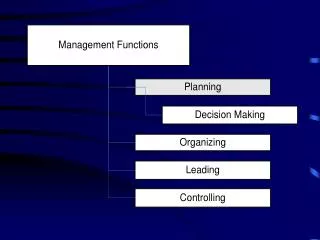
The Rational Model of Decision Making • Identify the problem • Identify alternative solutions • Gather and organize facts • Evaluate the alternatives • Choose and implement the best alternative • Get feedback and take corrective action
Human Compromises • Simplicity • Bounded rationality • Subjective rationality • Rationalization • Personal perspective
Human Compromises • Bounded rationality • Choosing an alternative that meets minimum standards of acceptability Figure 9.3 The Process of Bounded Rationality
Human Compromises • Recency syndrome • tendency to remember more easily those events that have occurred recently • Stereotyping • rigid opinions about categories of people
Guidelines for Decision Making • Consider the consequences • Respond quickly in a crisis • Inform the manager • Be decisive yet flexible • Avoid decision-making traps
Tools for Decision Making • Probability theory • A body of techniques for comparing the consequences of possible decisions in a risk situation.
Tools for Decision Making • Probability theory • A supervisor cannot be 100% sure of an outcome. • A supervisor needs to know or be able to estimate the value of each possible outcome and the probability that this outcome will occur.
Tools for Decision Making • Decision trees • A graph that helps decision makers use probability theory by showing the expected values of decisions under varying circumstances.
Tools for Decision Making • Computer software • Decision-making software leads the user through the steps of the formal decision-making process. • Spreadsheet, Database management software
Syncetics – a group whose members are brought together as a problem-solving team • Nominal Grouping – a highly structured meeting in which individuals write their original ideas in private, with the alternative solutions anonymously presented to the group for discussion.
T chart • Queuing Theory – a decision-making technique that recommends the number of servers needed to handle an unpredictable workload • Linear Programming – a tool for allocating limited resources among competing needs by applying mathematical values to each solution variable
Group Decision Making • Advantages • Group members can contribute more ideas for alternatives than an individual could think of alone. • People who are involved in coming up with a solution are more likely to support the implementation of that solution.
Group Decision Making • Disadvantages • An individual can usually settle on a decision faster than a group. • There is a cost to the organization when employees spend their time in meetings instead of producing or selling. • Groups sometimes fall victim to groupthink.
Group Decision Making • Groupthink • the failure to think independently and realistically that results when group members prefer to enjoy consensus and closeness
Symptoms of Groupthink • An illusion of being invulnerable • Defending the group’s position against any objections • A view that the group is clearly moral • Stereotyped views of opponents • Pressure against group members who disagree • Self-censorship • An illusion that everyone agrees • Self-appointed “mindguards”
Using Group Decision Making • Encouraging participation • A main benefit of group decision making is the variety of opinions and expertise available. • Supervisors should: • Avoid monopolizing the conversation. • Focus on hearing participant’s opinions. • Notice when participants are quiet and ask their opinion. • React positively when people contribute ideas.
Using Group Decision Making • Brainstorming • An idea-generating process in which group members state their ideas, a member of the group records them, and no one may comment on the ideas until the process is complete
Creativity • Creativity • The ability to bring about something imaginative or new. • When a problem seems unsolvable, the supervisor needs creativity to find a fresh approach.
Generating Creative Ideas • Gather the raw materials by learning about the problem and developing your general knowledge. • Work over those materials in your mind. • Incubate; let your unconscious mind do the work. • Identify an idea. • Shape and develop the idea to make it practical.
Establishing and Maintaining a Creative Work Climate • A supervisor should show that he or she values creativity. • When employees offer suggestions, a supervisor should listen attentively and look for the positive aspects of the suggestions.
Establishing and Maintaining a Creative Work Climate • A supervisor should attempt to implement employees’ ideas and should give them credit. • When ideas fail, a supervisor should acknowledge that failure is a sign that people are trying. • A supervisor should help employees see what can be learned from the failure.
Overcoming Barriers to Creativity • Accept that failures by employees will occur. • If an idea fails, a supervisor should acknowledge the problem and not try to pass blame on to someone else. • Allow time for creative thinking. • Avoid isolation.